You might explain everyday makeup, compare shades, document hair styling or discuss beauty science within your expertise. A blog can be a creative project, a portfolio or a business experiment. An audience and income take work and are not guaranteed. Start with a scope you can cover responsibly and afford to maintain.
Start a Blog Karan Singh BhakuniUpdated 3 Nov 2026
How to Start a Beauty Blog: Setup, Photos and Honest Reviews
Karan Singh BhakuniUpdated 3 Nov 2026- 10 min read
- 11 sections
- 2 comparison tables
- 5 questions answered
The short answer
To start a beauty blog, choose a reader and a focused topic, pick a publishing platform, build a simple site and publish useful original content. For reviews, record the exact product, how you obtained it, the conditions of use, your observations and the limits of the result. Clear photos and honest disclosures matter more than an expensive launch.
Want the site rather than the reading? Build one free with Grigora
Contents11 sections

Read nextHow to Start a Book Blog: Setup, Reviews and Launch
1. Choose your reader and beauty niche
Define a specific question you can answer with original work. “Beauty” is broad; “beginner makeup with a small kit” or “lipstick shade comparisons photographed in consistent light” gives you a clearer first assignment. Choose by your interests, access to products and knowledge, rather than an assumed most-profitable niche.
- Write a one-sentence purpose: “I help [reader] understand [task] through [type of evidence].”
- List several real questions that fit that purpose and that you can investigate without buying a large collection.
- State relevant experience honestly. Explain when a post is personal experience, professional guidance or a sourced explanation.
Beauty readers have different budgets, skin tones, hair textures, preferences and access needs. Describe the people or conditions your examples represent without implying that one shade, routine or result works for everyone. For a narrower makeup focus, our guide to makeup tutorials can help you plan that branch of content.
2. Choose a platform and a sustainable budget
Compare hosted publishing services, self-hosted WordPress and website builders against the work you need to do. Try drafting a review with headings, a comparison table, photos and disclosures before committing. Check phone readability, image descriptions, navigation, backups or exports, total renewal costs and any commerce or email integrations you require.
Grigora is one option. Its Classic CMS guide explains creating and publishing blog posts; newer workflows may differ. Confirm the features and costs of your actual account rather than assuming every plan includes a newsletter, shop or research tool. A hosted service may include hosting; a self-hosted installation needs a hosting arrangement.
Plan for recurring platform or hosting charges, a domain if you want one, necessary products and occasional replacements. Begin with equipment you own. Check cancellation, renewal and export terms. Paid themes, cameras and plugins are optional purchases to justify with a specific need, not entry requirements for a beauty blog.
3. Set up a recognizable, readable website
Choosing the right domain name means picking a name you can say, spell and continue using if your topic expands. Check availability and possible name conflicts. You can test a blog on a platform address before buying a custom domain; neither a custom name nor an expensive design guarantees visibility.
Use a clear title, readable text and a small number of useful categories. Give product photos enough space without turning every page into a full-screen gallery. Preview the site on a phone: can readers compare swatches, read the disclosure and reach the menu without pinching or horizontal scrolling?
- About: your focus, relevant experience and how readers should interpret your advice.
- Review policy: how you select products, record use, handle gifts and sponsorships, and correct errors.
- Contact: a safe route for readers and brands; you do not need to publish your home contact details.
- Privacy and other appropriate legal information for the data, advertising and sales practices you actually use. Obtain local advice when needed.
4. Plan useful first posts
Build a small starting list around questions you can answer completely. A personal introduction gives context, but practical posts give people a reason to use the blog. Work from products you already know when appropriate; do not buy or recommend a product merely to fill a publishing slot.
| Post format | Useful evidence to prepare |
|---|---|
| A product review | Exact product and shade, acquisition/disclosure, use conditions, photos, positives, drawbacks and limitations. |
| A shade or finish comparison | Clearly labeled products photographed under consistent conditions; explain what was and was not comparable. |
| A beginner tutorial | Tools and products, understandable steps, original photos, necessary cautions from reliable sources and an achievable scope. |
| An explanation or interview | Current primary sources or a qualified contributor, clearly identified credentials and a distinction between evidence and opinion. |
Research questions from readers and communities, and read existing answers to find what is missing. Do not turn another writer’s review into your supposed experience. A curated list can be useful, but label products you have not used and explain the selection method. Do not invent a “tested best” ranking.
5. Keep a review record before you write
A review becomes easier to assess when readers know what happened. Use the following worksheet for each product. It is an editorial record, not a controlled experiment, and you should leave a field unclaimed when you do not know it.
| Field | What to record |
|---|---|
| Identity and acquisition | Brand, full product name, shade or variant, purchase date where relevant, and whether bought, gifted, lent or sponsored. |
| Use conditions | Dates and duration of actual use, amount or method described without exceeding label directions, other products used, and relevant context you are comfortable sharing. |
| Observations | Specific appearance, texture or wear observations; distinguish immediate first impressions from longer use. Record drawbacks as well as positives. |
| Photos and comparisons | When and how images were taken, lighting and camera conditions, any edits, and differences that limit a comparison. |
| Limits and follow-up | What was not tested, whose experience is represented, source links for factual claims, and a process to correct or update the post. |
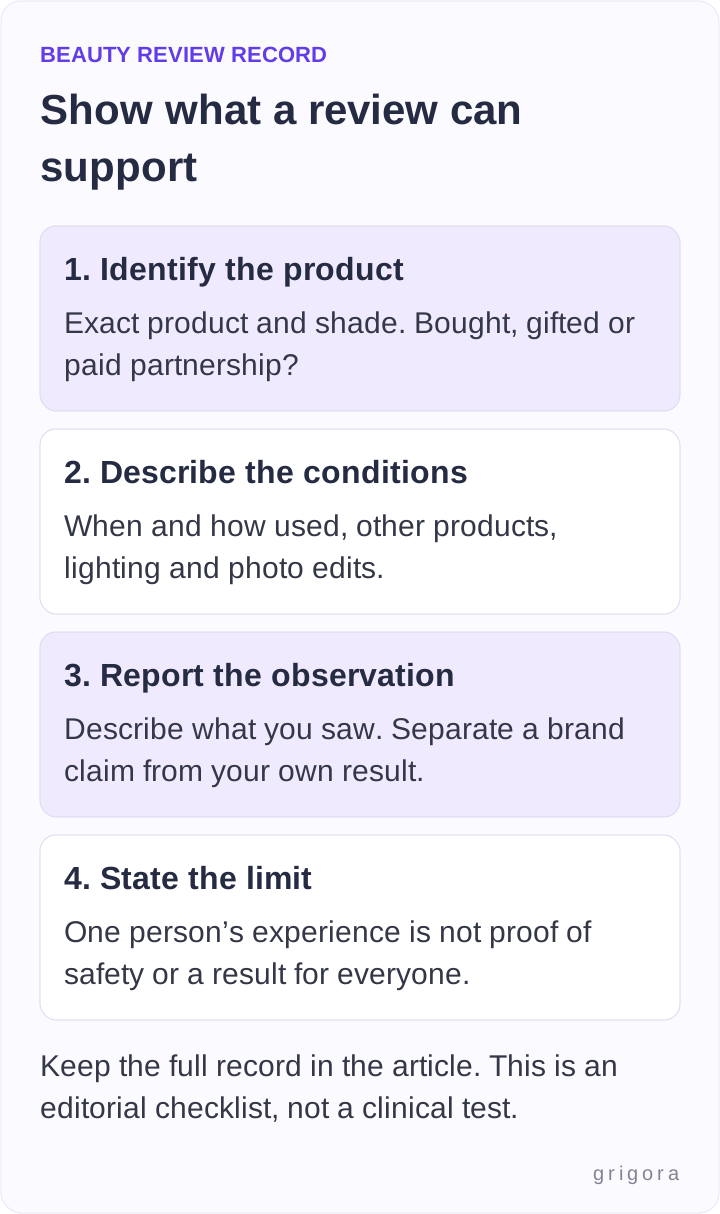
Write with that record beside you. “The color looked warmer in my indoor photo than in daylight” is a useful observation if it is true. “This works for every skin type” is a much wider claim that one person’s experience cannot establish. Clearly attribute the manufacturer’s statements instead of repeating them as your findings.
Also worth readingHow to Start a Dog Blog: Content, Setup and Launch
6. Take informative photos without misleading edits
Start with your available camera or phone, a stable position and light that shows the subject clearly. Photograph the packaging or shade label where it helps identification, then the feature the reader is comparing. Keep backgrounds and framing simple. A phone can be enough; upgrade only after identifying a limitation in your existing setup.
For swatches or before-and-after images, keep lighting, camera settings, angle and distance as consistent as practical and disclose important differences. Avoid filters, skin smoothing or color edits that change the result you claim to show. If a picture is illustrative, stock or generated, label it as such and do not present it as evidence of personal product use.
Use your own media or obtain the necessary rights. Ask permission before showing another person, and avoid exposing identifying or sensitive details. Provide text alternatives appropriate to each image’s purpose; for example, explain the comparison the swatch photo communicates. Keep product labels and key details readable on a phone, compress images and check the published page.
7. Separate beauty opinions from health and advertising claims
A personal cosmetic review should not become an unsupported diagnosis or treatment recommendation. For health-related content, use current authoritative sources and appropriately qualified review; state the reviewer’s role accurately. A disclaimer does not make an unsupported claim reliable. Do not repeat a DIY recipe or a product’s claimed effect merely because it is popular.
For U.S. readers, the FDA explains that intended use distinguishes cosmetics from drugs; claims to treat disease can change the category. It also states there is no federal standard defining “hypoallergenic” cosmetics. Do not translate that label into a promise that a product cannot cause a reaction. Check the rules and professional sources relevant to your audience and topic.
Disclose relevant commercial relationships clearly where readers encounter the endorsement. For example, distinguish a free sample, paid placement and commission-earning link. The FTC’s U.S. influencer guidance also requires honest experience and support for claims. Do not hide the relationship only on a separate policy page or let a sponsor require a favorable verdict.
8. Help readers find and use the blog
Search Engine Optimization (SEO) starts with a useful, understandable page. Choose a descriptive title that matches the actual question, organize the answer with helpful headings, link relevant posts and describe images in context. Check that intended public articles are accessible to search engines. There is no required keyword density or word count that makes a beauty review rank.
Choose a promotional channel you can maintain. Share a useful excerpt, a correctly labeled photo or a short demonstration where your intended readers already spend time, and follow community rules. For incorporating video content, keep the written explanation and disclose commercial relationships in the video as appropriate. Do not turn every reply into a link drop.
If you offer an email subscription, explain what readers will receive and how often, obtain appropriate permission and provide an unsubscribe route. Answer questions that fit your scope; use them to improve unclear sections. Track relevant visits, reader questions and subscriptions rather than treating follower counts as proof of trust or sales.
9. Consider income without compromising the review
Affiliate marketing, sponsorships, ads and paid resources are possible business models, not promised earnings. Check each program’s current eligibility, terms and costs. Start with content that serves readers and a method you can sustain; you do not need to monetize the launch.
If you create an e-book or an online guide, make its scope, authorship and limits clear, confirm rights to included material, and provide accurate product and refund information. Selling cosmetic products or individualized health advice adds responsibilities beyond publishing a blog. Verify those requirements with qualified help before offering them.
10. Publish, learn and maintain
Before publishing, verify names, shades, links, sources and disclosures. Read the post on a phone, check every image and comparison table, and confirm that a reader can distinguish observation from marketing. Keep the raw notes and original media so you can resolve a correction request.
Choose a cadence that leaves time for actual use, research, photography and checking. Update posts when formulations, availability, links or supported conclusions change; say what changed when that affects the reader’s decision. Revisit your topic list using real questions and results. Your next step is one useful, properly documented post, not a large collection of thin reviews.
Frequently asked questions
Yes, you can share clearly labeled personal experience, opinions and supported explanations. State your experience honestly, and do not present yourself as a qualified health professional unless you are one. Medical claims require appropriate evidence and expertise.
No. Start with equipment and suitable products you already have. Clear light, accurate labels and an honest record of what you used are more useful than buying equipment or products simply to fill the blog.
Use a schedule you can sustain while doing the work each post requires. There is no universal weekly quota. A review should reflect actual use and checking rather than a deadline-driven claim.
It may earn through affiliates, sponsorships, advertising or resources, but eligibility, revenue and expenses vary. Income is uncertain. Disclose relevant relationships and keep commercial arrangements separate from the verdict.
State that the product was gifted and disclose any other relevant relationship where readers see the endorsement. Report actual experience accurately, and do not infer universal safety or treatment benefits from a label or your own result. Use authoritative sources and qualified review for health-related claims.
Practical writing on building a site, growing an audience and sending email people open. No more than one a week.

Karan Singh Bhakuni
118 articles on the Grigora blog
More on Start a Blog

Start a Blog
How to Start a Book Blog: Setup, Reviews and Launch
Choose your reading focus and platform, build a useful review format, and publish a small launch collection. Includes a review worksheet, budget checklist, spoiler policy, and first-month plan.
3 Feb 202617 min read

Start a Blog
How to Start a Dog Blog: Content, Setup and Launch
Choose a dog-blog niche, build a simple site and publish useful original work. Use observation, source and review checks before promoting or monetizing it.
28 Oct 202310 min read

Start a Blog
How to Start a Spiritual Blog: Purpose, Setup and First Posts
Choose a purpose and reader, build a readable site and write thoughtful spiritual posts. Use a practical reflection outline and clear checks for sources, privacy and permissions.
20 Sept 202311 min read