You can begin with a hosted address and a small project; a custom domain, paid theme or large article collection is not a universal requirement. The Nigerian agency/provider details below are based on official documentation checked on 2 November 2026. Use current official terms for your own location, activity and account.
Start a Blog Karan Singh BhakuniUpdated 3 Nov 2026
How to Start a Blog in Nigeria: 10 Practical Steps
Karan Singh BhakuniUpdated 3 Nov 2026- 16 min read
- 12 sections
- 4 comparison tables
- 8 questions answered
The short answer
To start a blog in Nigeria, choose a reader and topic, select a platform you can maintain and pay for, set up a suitable address, and publish a useful first post. Test the live page on a phone, then choose a realistic way to reach readers. If you plan to earn money, check the applicable business/tax duties and an eligible payment route before offering paid products or services.
Want the site rather than the reading? Build one free with Grigora
Contents12 sections
Read nextHow to Start a Makeup Blog: 11 Practical Steps
1. Choose a reader and a question you can answer well
Decide who the blog serves and what it helps them do. “Technology” is broad; a clear project might explain device features for a defined budget or document a skill the author actually practices. Choose a subject you can research responsibly and keep current. Health, legal and financial topics require particular factual care and appropriate expertise; they are not automatic high-income beginner niches.
| Illustrative direction | A useful article task | Evidence to prepare |
|---|---|---|
| A practical skills blog | Explain one task at the reader’s level. | Your actual method, prerequisites, worked steps and limits. |
| A local information guide | Explain a service or application relevant to a defined location. | Current official source, location, eligibility, date checked and a correction route. |
| A food/craft interest | Show a process you have actually completed. | Original notes, materials, meaningful step images and relevant safety/permission checks. |
| A product comparison | Compare actual features or documented observations. | Exact product/version, criteria, sources, dates and what was not tested. |
Choose the language or languages you can write and check well for those readers. English, Nigerian Pidgin or another language may fit different projects; none establishes lower competition, higher earnings or a ranking advantage by itself. If translating, review names, dates, terms and the meaning of the instructions rather than publishing an unchecked translation.
2. Make a budget for setup and renewal
Get actual quotes in the currency you will pay and compare the total billed amount, not only an advertised monthly equivalent. A first-year discount may change at renewal. A foreign-currency plan may also involve your bank’s conversion and payment charges; do not assume an old naira conversion or another person’s card result applies to your account.
| Budget item | What to record before buying |
|---|---|
| Domain, if needed | Extension, registration term, first charge, renewal, transfer/recovery terms and account owner. |
| Hosting or hosted platform | Full upfront bill, renewal, trial end, storage/media limits, support and export/recovery options. |
| Optional theme/plugins/tools | Which function you need, free/paid limits, renewals and whether an existing included feature already covers it. |
| Writing/media and connectivity | The data, storage and equipment you actually need. Start with available equipment that can produce readable work. |
| Commercial activity | Payment fees, settlement currency, refunds, fulfillment, applicable filings/taxes and professional help where needed. |
Keep a simple quote record: provider, plan, date, currency, total due today, next renewal amount/date, essential limits and cancellation/export notes. A published price in this guide would age quickly; the linked current provider terms and your checkout quote are the useful evidence. There is no dependable setup budget or income timetable that fits every Nigerian blog.
3. Choose a platform and confirm the actual payment/workflow fit
Pick a route that matches your skills, budget and ownership needs. Test a complete article, images, headings, a contact route and the phone view before a long commitment. Also confirm the account terms and that you can pay the real renewal bill through an accepted method. Paying for the website and collecting payments from your own readers are separate arrangements.
| Route | Useful starting checks | Current primary information |
|---|---|---|
| A hosted blog such as Blogger or WordPress.com | A provided address can help you begin without separate hosting. Check account terms, media limits, site visibility, custom-domain/ads/plugin rules and export for the plan. | Blogger setup; WordPress.com plan features. |
| Grigora hosted website/CMS | Try your own draft and editor workflow. Website publishing starts with a 14-day trial; paid website plans include hosting, SSL/CDN and domain connection. Registration/renewal of a domain and optional third-party services are separate. Verify your billing method and required checkout route. | Current Grigora terms. No free-forever website or automatic Nigerian merchant approval is implied. |
| Self-hosted WordPress | Choose a host and someone responsible for installation, updates, recovery and backups. Check the actual plan, support, payment terms and performance with your content. | WordPress hosting guidance. Server geography or an expensive plan alone does not establish the reader’s experience. |
Ask a prospective host what the backup/restore process covers, who handles security updates and how to recover access. If performance matters for readers in Nigeria, evaluate the actual site from relevant connections/devices rather than declaring every local or foreign host faster. Record your test conditions and only report results you measured. Avoid card/account workarounds that misrepresent your residence or ownership.
4. Choose and control the address
Choose a name you can spell and use consistently, then check for confusingly similar brands before committing. A .com, .ng or .com.ng can suit different plans; none guarantees search visibility. The Nigeria Internet Registration Association (NiRA) explains that .ng registration is through an accredited registrar, with registrar-set fees. Use its accredited registrar directory rather than assuming a vendor is accredited or that the cheapest first-year offer is the best fit.
- Check the exact extension and any eligibility restrictions, first registration charge and renewal.
- Keep the registrant/account details under the intended owner’s control, with secure recovery and a reliable email address.
- Record DNS/domain-connection instructions and who will maintain them. A registrar and website host may be different services.
- Test the intended HTTPS address after connection. Do not change published article URLs casually; arrange relevant redirects when a real move is necessary.
5. Build a simple site with a real draft
Create a clear home/post index, an accurate About page and an appropriate contact/correction route. Use a few categories that match the actual material. Add privacy/commercial information based on the tools and activities you use, rather than copying a policy that describes a different website. Keep menus and pages free of demo text or empty offers.
In Grigora, follow the workflow for your editor. AI-built sites use CMS collections and connected layouts; classic visual-builder sites use CMS/compatible blocks. The classic post guide identifies its legacy scope. Add a test article, verify its listing and full page, then follow current publishing/domain instructions.
Use supported strong account security and recovery options. For self-hosted software, clarify maintenance and recovery responsibility instead of installing many overlapping plugins by default. Keep suitable copies of writing and original media and understand the scope of exports, version history and restore tools. A version list is not automatically a complete independent backup.
6. Write original posts with current local evidence
Begin with one complete reader task. Answer it near the top, give the relevant Nigerian/location context and explain the steps or reasoning in a usable order. There is no required first batch of five or ten posts before sharing. Add more articles when you have material worth publishing, not to meet an invented approval threshold.
- Identify the scope: location, intended reader, product/service version and what the guide actually covers.
- Find the authority: link the relevant official institution, provider documentation or original source for a changing requirement.
- Record the check: source URL, date, currency/amount where relevant, eligibility and important limits. Keep a note of what you personally tested versus what the source says.
- Explain and illustrate: give complete steps or an example you can check. Label hypothetical examples; do not invent a portal visit, conversation, test result or personal experience.
- Make updates traceable: correct a changed fee, rule, address or process and explain the material change. A new date alone does not show an old claim was rechecked.
Use original images or material you have appropriate rights to publish. For royalty-free images, read the license: the label does not mean no conditions or no copyright. Captions should explain what the image proves or illustrates. Do not expose a person’s identity document, bank information, account token or private conversation in a screenshot.
Use accurate titles, clear headings and relevant links rather than repetitive location keywords. Give images proper file names and appropriate alt text. Optimize your images for the actual display while keeping labels readable; essential instructions also belong in page text. Google’s people-first guidance does not supply a preferred article word count or a promised result from a posting schedule.
7. Test mobile use and publish the intended version
This pre-launch phase should answer whether the intended reader can use the page. Publish/launch the site and post, set the intended public or restricted access, and open the final URL as that reader. Being able to see a draft while signed in is not the same as a public article working.
- On a phone and larger screen, check headings, image labels, menus, tables, links and forms for clipping or unusable controls.
- Try the connections/devices relevant to your audience where practical. Check load behavior before adding heavy galleries, autoplay video or unnecessary embeds.
- Use appropriate text alternatives, captions and logical headings. Try keyboard access and zoom; quick checks are a starting point rather than proof of complete accessibility.
- Verify source links, author/contact details, actual public URLs and any necessary audience restrictions.
- If a paid offer exists, test the whole supported payment/receipt/delivery route in the appropriate controlled test process before promoting it. Do not report a successful payment or settlement that you have not observed.
Also worth reading5 Essential Steps to Start a Running Blog
8. Check Nigerian business, tax and privacy duties
Domain registration, business-name registration and company incorporation are separate. If you are carrying on a commercial activity, check the appropriate name/structure and applicable filing duties rather than assuming every blogger must form a company or that a payment account exempts you. CAC publishes current business-name steps and company-registration steps. Use its official portal and current fees/requirements for the route that actually applies; retain confirmations and continuing-filing dates.
Keep income, costs, invoices, refunds and platform/payment statements from the start. Nigeria’s current tax framework includes the tax laws published by the Nigeria Revenue Service (NRS); the administration framework commenced on 1 January 2026. Ask the relevant state/FCT tax authority or NRS, according to your person/entity and circumstances, about registration, reporting, payment and any reliefs. Record local and foreign-platform receipts instead of assuming an overseas payer or a small payout settles their tax treatment.
For tax identification, use the official NRS/Joint Revenue Board Tax ID service to retrieve/verify the appropriate identity using its current instructions. Taxable-person registration is separate from buying a domain or choosing a CMS. Submit identity information only through the appropriate authorized channel; it does not belong in a public blog post or reader contact form.
If collecting personal data through forms, comments, newsletters, analytics or sales, map what is collected, why, by which providers and for how long. The Nigeria Data Protection Commission (NDPC) provides the current Act and implementation guidance. Assess lawful processing, appropriate notices/security, rights requests and any registration/transfer requirements that apply to the actual activity. A privacy-page template does not establish compliance or mean every blog has the same obligations.
Use appropriate Nigerian legal/tax advice for a specific uncertain obligation, regulated service, co-owner arrangement or cross-border operation. Keep sourced general information separate from personalized professional advice. Sponsorship and affiliate arrangements also need truthful commercial identification and the applicable terms/rules; a friendly review does not excuse an undisclosed paid relationship.
9. Choose an eligible income and payment route
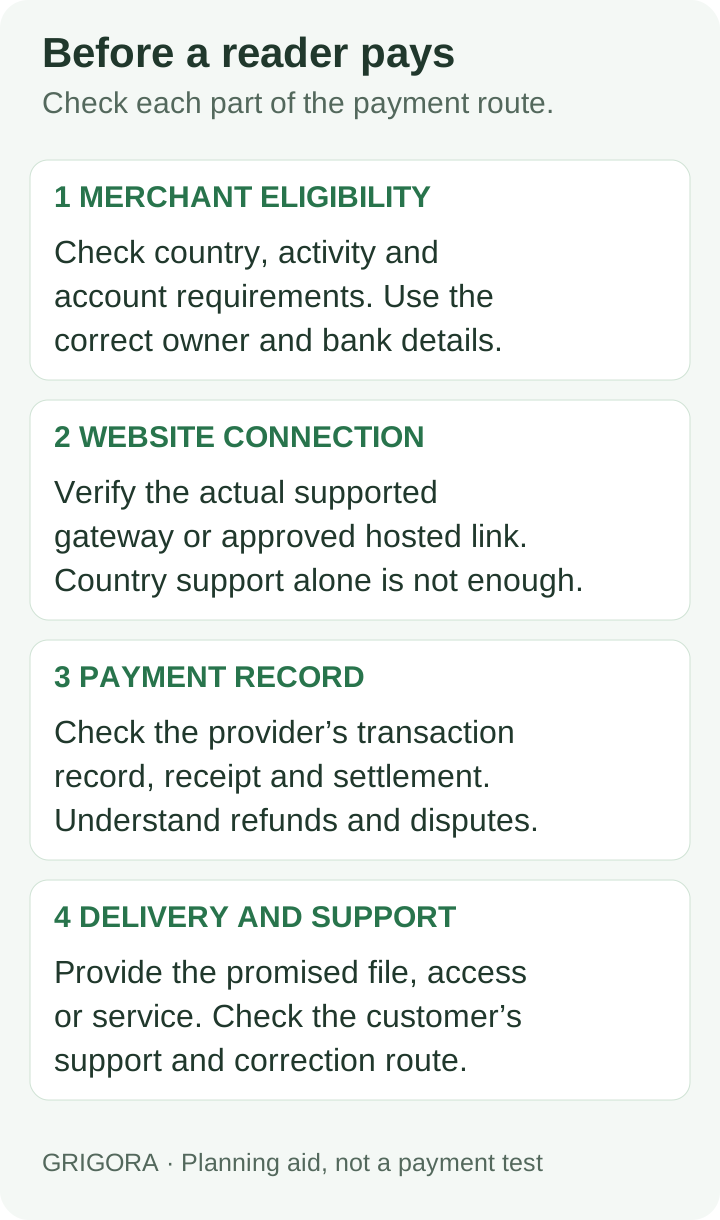
Monetizing your blog is optional and depends on a useful offer or audience, program eligibility and costs. Advertising, affiliate commissions, sponsorships, services and original products have different requirements. There is no reliable timetable for traffic, approval or profit. Prepare a way to receive, reconcile, refund and fulfill a payment before inviting a customer to pay.
| Route | Check before offering it |
|---|---|
| Display advertising | Nigeria appears in AdSense’s current availability list. Country availability is not site approval: review current content/account/policy and payout requirements. Do not buy an approved account or infer approval from a fixed post count. |
| Affiliate or sponsored work | Confirm the actual program accepts your publisher/location and supports a payout method you can use. Record fees, thresholds, disclosure terms and the basis for any claim you make. |
| Services or an original paid resource | Define the deliverable, price/currency, terms, support, fulfillment and any relevant licensing/tax obligations. The offer needs a working access/delivery process as well as a payment button. |
| Direct customer payments | Verify the provider’s Nigerian merchant type, identity/registration requirements, supported methods/currencies, fees, settlement account, refunds/disputes and platform compatibility. |
Digital products need delivery that matches the description: file format or access, permitted use, support and refund terms. Check the exact provider feature you choose; a general payment page may not include digital-file delivery. If fulfillment is manual, state a timeframe you can meet and keep the customer’s access/support route clear.
As one provider example, Paystack’s business-type documentation offers Nigerian Starter and Registered routes with different limits/features. On 2 November 2026, its published Nigeria Starter collection limit was NGN8,000,000. Use the current page for limits and upgrade requirements; a Starter account is not a legal exemption from government obligations.
Its Nigerian compliance guidance requires matching owner/identity, BVN and bank details for the relevant Starter process, with different documents for registered types. Verify the actual checklist before submitting. Do not use someone else’s identity, bank account or a false country to make a provider appear available.
Provider eligibility and site integration are different checks. Stripe lists Nigeria through its Paystack extended network; that does not mean a standard Stripe checkout integration automatically accepts a Nigerian Paystack account. Grigora’s currently documented Commerce providers are Stripe, PayPal, Paddle and Razorpay; a native Paystack checkout connection is not verified here. Confirm the precise supported route before choosing a paid commerce plan or promising checkout behavior.
A supported hosted payment link can be an alternative when the provider approves your activity. Paystack Payment Pages can provide a shareable payment-page link. Link the approved offer from the blog if appropriate, and verify receipt, settlement, refunds and any product delivery separately. A redirected success page or a customer’s screenshot is not by itself evidence that fulfillment and settlement are complete.
10. Share useful work and maintain a manageable routine
Choose a channel your intended readers actually use and whose community rules you can follow. Share a useful excerpt and the working article link. A WhatsApp group, social account, relevant community or email update may fit different audiences; do not add people to marketing lists merely because you have their contact details or because they bought a product.
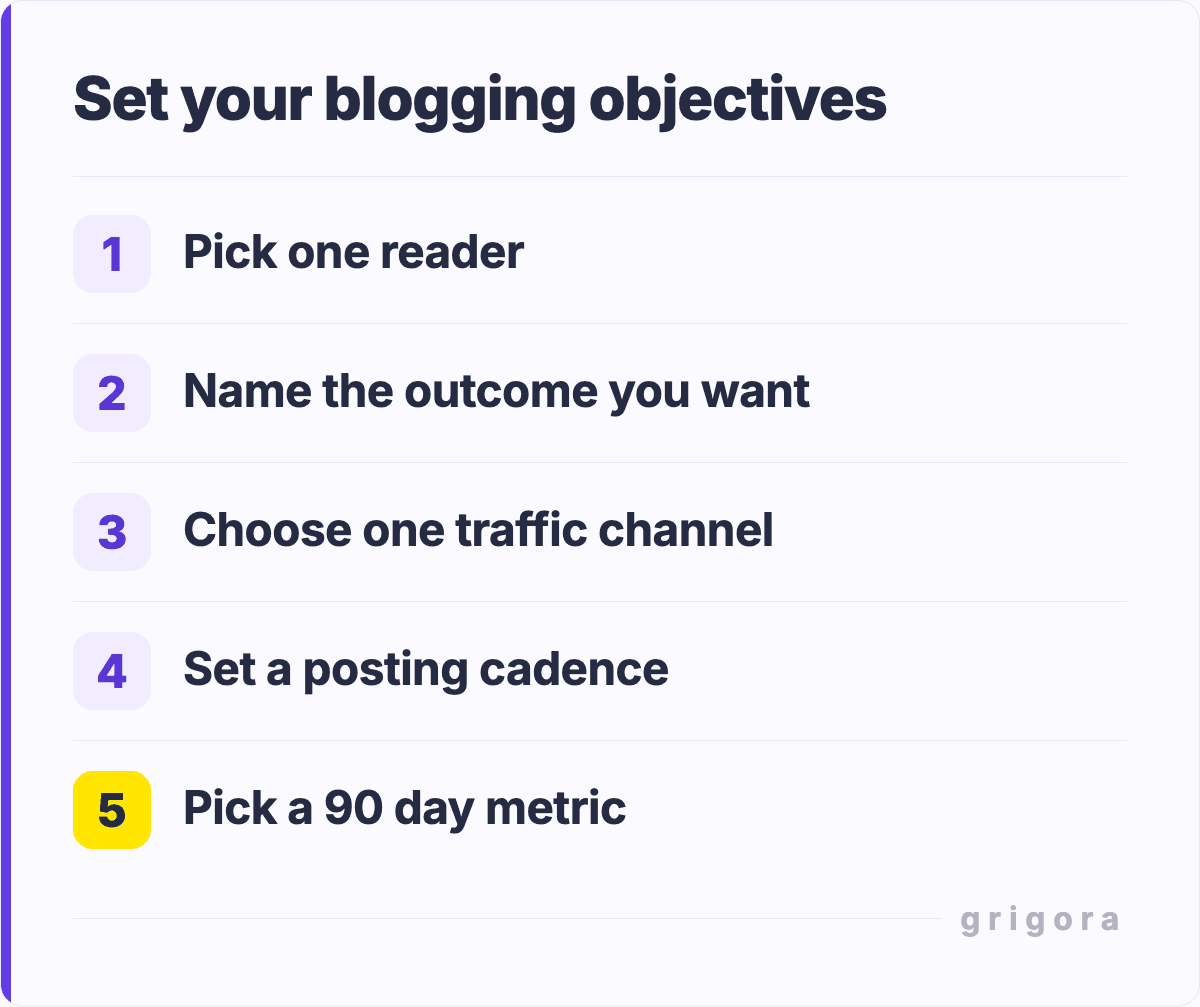
Keep a small calendar with topic, evidence needed, draft/review date and owner. Allow time for updates, connectivity limits and other responsibilities. A first review might examine which questions remain unclear, which source links changed and which readers reached the article. An optional 90-day checkpoint is a planning device, not a promise that earnings or rankings will arrive by then.
If you use Bing Webmaster Tools, Search Console or analytics, compare the metric that answers the question: impressions describe search visibility, clicks/visits describe traffic and verified transactions describe sales. Review comparable periods and relevant pages/queries; do not attribute a change to one cause without evidence. Update a weak explanation or broken route before spending on broad promotion.
A practical first-publication checklist
- The reader/task and language are clear; no fictional firsthand experience or result is presented as real.
- Budget, renewal ownership, platform workflow and the intended address have been checked.
- The first post supplies useful original work, current sources and appropriate media rights/alternatives.
- The final URL and key page interactions work for the intended audience on the devices actually tested.
- Any business, tax, privacy and payment questions have a recorded source and next action; an unresolved requirement is not treated as approval.
- Any paid offer has a supported provider/integration and a checked receipt, refund and delivery process before promotion.
- An owner is responsible for corrections, account recovery, renewal and the next useful post.
Frequently asked questions
Yes, a suitable hosted platform address can be enough to begin. Check the account and plan terms, media limits and any later custom-domain requirements. A paid address is not a universal condition for publishing a useful first post.
Use current provider quotes for the full upfront and renewal amounts, currency/conversion charges, domain, hosting/platform, optional tools and data/storage needs. Commercial activity adds payment/fulfillment and applicable filing/tax costs. One fixed naira budget will not fit every setup.
Choose for your audience, name, cost and ownership plans. NiRA’s .ng namespace is registered through accredited registrars with their current terms and fees. Domain availability is separate from brand clearance, and an extension alone does not establish search rankings.
Many writing and publishing tasks can be done on a phone where the platform supports them. Test your actual editor, uploads and final page; tables, DNS changes or larger edits may be easier on another device. Do not assume every desktop control has identical mobile behavior.
Assess the activity, operating name and structure with CAC’s current official requirements. A domain, business-name filing and company incorporation are different. Payment-provider approval, including a Starter account, does not decide your government registration or tax duties.
No automatic compatibility follows from provider availability. Check merchant eligibility and the website’s actual supported gateway separately. A verified hosted payment-page link may fit some offers, but receipts, refunds, settlement and delivery still need their own checks.
Nigeria is on Google’s current AdSense country-availability list. Site/account eligibility, approval, policy compliance and payout requirements still apply. No fixed article count, approval duration or earnings level is established by country availability.
There is no dependable timetable. Audience, content, offer, eligibility, costs and execution differ, and a new blog may earn nothing. Use real results and a budget you can sustain rather than assumed ads, affiliate payouts or sponsorships.
Practical writing on building a site, growing an audience and sending email people open. No more than one a week.

Karan Singh Bhakuni
118 articles on the Grigora blog
More on Start a Blog
Start a Blog
How to Start a Makeup Blog: 11 Practical Steps
Build a makeup blog around useful tutorials and observations you can support. Includes a review worksheet, photo checks, platform choices, a first-content plan, and disclosure guidance.
28 Nov 202314 min read
Start a Blog
5 Essential Steps to Start a Running Blog
Turn your running notes into useful posts. Choose a reader, set up a manageable website, document your experience, and check routes and photos before publishing.
12 Nov 202312 min read
Start a Blog
How to Start a Blog as a Teenager: A Practical Guide
Choose a topic, plan your first post and set up a blog you can manage alongside school. Check account rules, privacy and payment conditions before launching.
27 Oct 202310 min read