

“A reader lives a thousand lives before he dies. The man who never reads lives only one.”
Starting a book blog is not about chasing trends or writing perfect reviews. It is about building a quiet corner of the internet where reading, thinking, and honest opinions live long term. In a world dominated by short form content and fleeting opinions, book blogs still matter because they slow things down. They give readers context, depth, and trust.
A book blog is a website where you publish content about books such as reviews, reading lists, author discussions, and literary opinions. To start a book blog, you need a clear niche, a blogging platform, consistent content, and basic SEO. With tools like Grigora, you can create and manage a book blog without technical skills, using ready made templates and a simple content management system.
Choosing Your Book Blog Niche
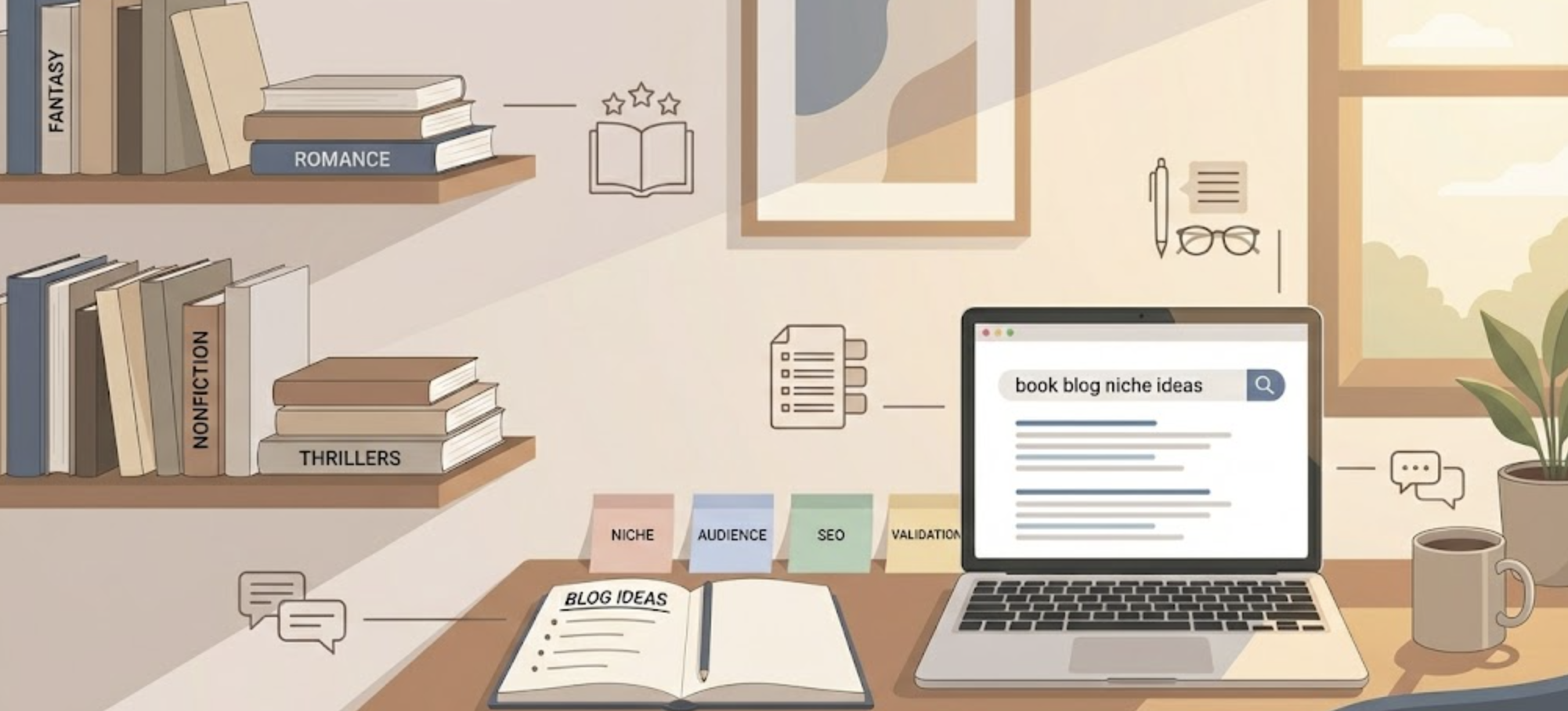
One of the biggest mistakes new book bloggers make is trying to write about every book for every reader. That usually leads to burnout and zero growth. A niche gives your blog focus, identity, and direction.
Your niche answers one simple question for a reader:
“Is this blog for someone like me?”
Popular Book Blog Niches
You do not need to invent something completely new. Many successful book blogs grow by owning a clear slice of the reading world.
Popular and proven book blog niches include:
Book reviews across a specific genre
Genre focused blogs like fantasy, romance, nonfiction, or thrillers
Author centric blogs covering specific writers or indie authors
Reading lists and recommendations such as “best books for beginners”
Bookish opinion blogs focused on themes, trends, and discussions
A focused niche makes it easier to:
Attract the right readers
Rank on Google
Build authority faster
Specific beats broad, especially in the beginning.
Validating Your Niche Idea
Before committing, validate your niche with simple checks.
Ask yourself:
Are people searching for this topic on Google?
Do other book blogs already exist in this space?
Can I write at least 30 to 40 posts on this niche?
Search for your niche keywords and scan:
Existing blog posts
Depth of content
Reader comments and engagement
If competition exists, that is a good sign. It means there is demand.
Validation is not about being unique. It is about being useful.
Branding Your Book Blog
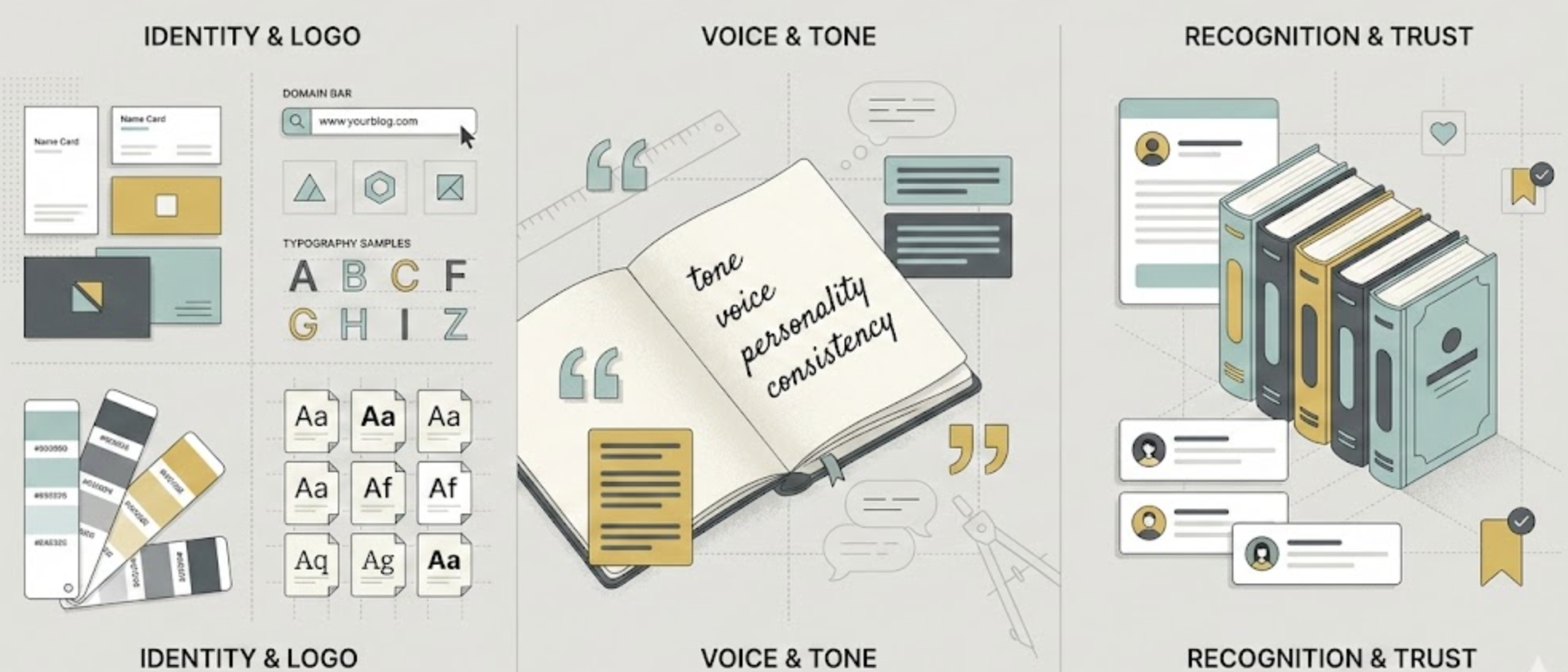
Branding is what makes your book blog memorable and trustworthy, even before someone reads a full post. It is not about fancy logos or complex design. It is about clarity, consistency, and personality.
A strong brand helps readers remember you, return to your blog, and recommend it to others.
Choosing a Blog Name
Your blog name should be simple, readable, and flexible.
A good book blog name is:
Easy to spell and pronounce
Relevant to books or reading
Not tied too tightly to one trend or genre
Available as a domain
Avoid names that are too long or overly clever. You want something that works on:
A website
Social platforms
Email newsletters
Your name does not need to explain everything. It just needs to be recognizable and brandable.
Defining Your Voice and Style
Your voice is how your writing sounds to readers.
Decide early:
Will your tone be conversational or analytical?
Will you focus on emotional reactions or critical analysis?
Will your reviews be short and sharp or long and reflective?
The best book blogs sound like a thoughtful reader talking to another reader, not a publisher’s press release.
Once you stay consistent with your voice, readers start to recognize your writing instantly.
How to Create a Book Blog Using Grigora
This is the part where most beginners get stuck. Hosting, plugins, themes, settings. The technical side often stops people before they even publish their first post. Grigora removes that friction completely.
You do not need to be a developer or a designer. You just need an idea and the willingness to start.
Why Grigora Is Ideal for Book Blogs
Grigora is built for creators who want to write and publish without technical overhead.
Grigora works especially well for book blogs because:
It is no code and beginner friendly
It comes with a built in CMS made for blogging
It offers SEO tools out of the box
It includes ready made blog templates
It handles performance, hosting, and security automatically
Instead of juggling WordPress, plugins, hosting providers, and design tools, Grigora gives you one clean platform to manage everything.
Less setup. More reading. More writing.
Creating Your Book Blog in Grigora
Setting up your book blog in Grigora takes minutes, not days.
Setting Up Your Site
You start by:
Creating a new site inside Grigora
Selecting a blog focused setup
Connecting a custom domain when you are ready
No server configuration. No plugin installation. Everything works out of the box.
Choosing a Book Blog Template
Grigora provides templates designed specifically for content heavy blogs.
When choosing a template:
Prioritize readability
Look for clean typography
Make sure book covers and text balance well
You can always change templates later, but starting with a clean layout helps you focus on content.
Customizing Colors and Fonts
Grigora allows easy customization without design skills.
You can:
Adjust colors to match your brand
Choose readable fonts for long articles
Maintain visual consistency across posts
Design should support reading, not distract from it.
Book Blog Templates in Grigora
Templates are not about limiting creativity. They are about removing decision fatigue so you can focus on reading, thinking, and writing. Grigora’s book blog templates are built with one goal in mind: make long form reading enjoyable.
Each template supports a slightly different style of book blogging.
Minimal Book Review Layout
This template is perfect if your blog is review first.
It focuses on:
Clean typography
Clear hierarchy for headings
Prominent book title and author placement
Space for long, thoughtful reviews
There are no distractions. No unnecessary widgets. Just text, images, and structure.
Best for: bloggers who write deep, reflective book reviews and want readers to stay focused.
Author Focused Blog Template
If your content revolves around authors rather than individual books, this layout works beautifully.
It supports:
Author profiles
Lists of books by the same author
Opinion pieces and long essays
Cross linking between related posts
This template makes your blog feel more like a literary magazine than a review site.
Reading List and Recommendations Layout
This template is designed for discovery.
It highlights:
Curated reading lists
Recommendations by mood, theme, or genre
Short summaries with clear navigation
Readers can scan, explore, and save posts easily.
Best for: bloggers who enjoy helping readers find their next book.
Once your template is chosen, design still matters. In the next section, we will cover designing your book blog, with a focus on readers and mobile experience.
Designing Your Book Blog
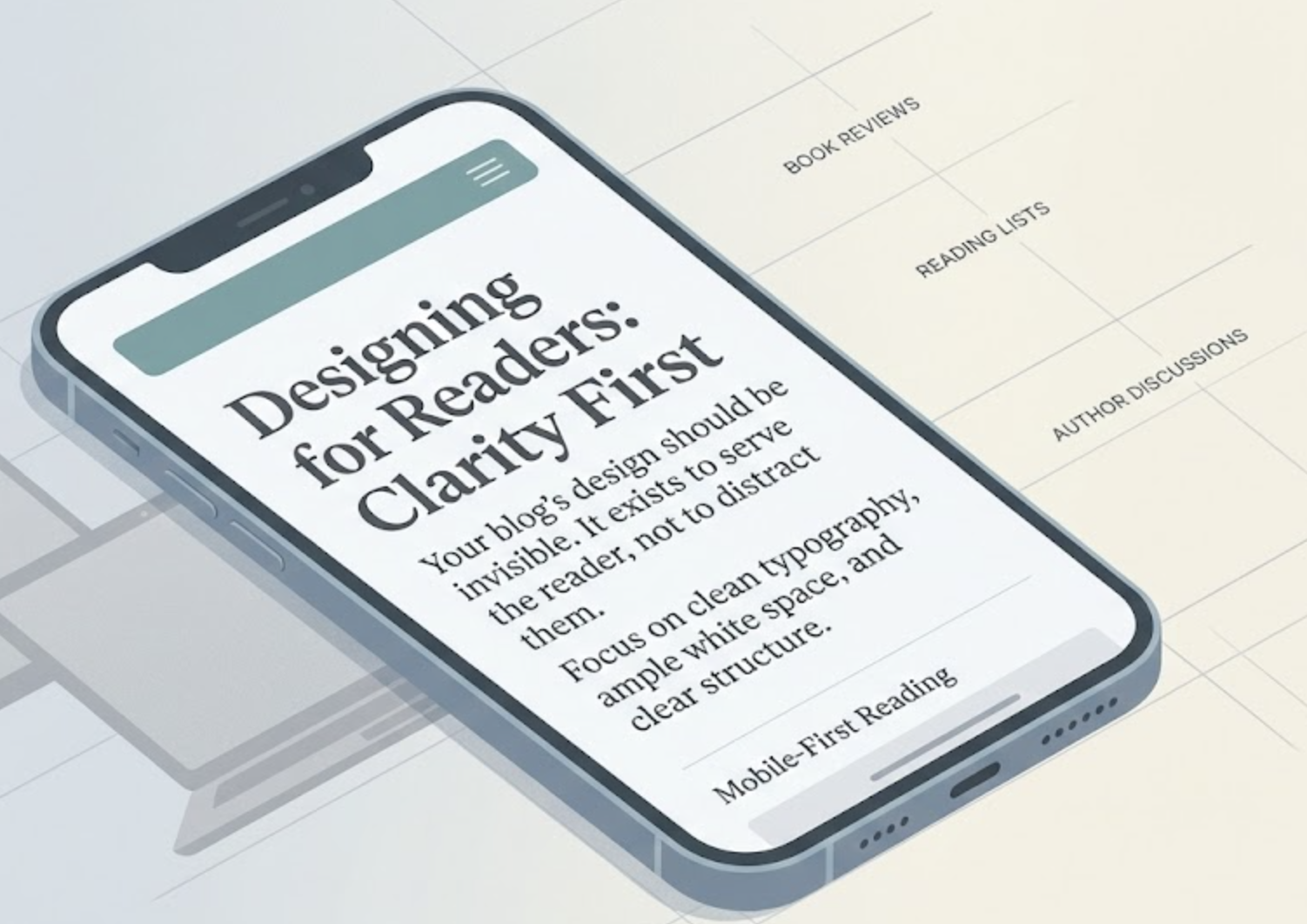
Design should never compete with your words. A good book blog design gets out of the way and lets reading happen. Readers come to your blog to think, not to navigate complex layouts.
Reader First and Mobile Friendly Design
Most readers discover blogs on their phones. If your blog is hard to read on mobile, they leave.
A reader first design focuses on:
Large, comfortable font sizes
Short paragraphs with enough spacing
High contrast between text and background
Fast loading pages
Grigora themes are mobile responsive by default, which means your blog adapts automatically across devices without extra work.
If a reader can comfortably read one full post on their phone, your design is doing its job.
Structuring Categories and Navigation
Categories help readers explore more of your content without thinking.
Keep your structure simple:
Organize posts by genre or theme
Avoid too many categories
Use clear labels that match reader intent
For example:
Book Reviews
Reading Lists
Author Discussions
Grigora’s CMS lets you manage categories easily so your content stays organized as your blog grows.
Good navigation increases reading time and builds trust.
Essential Pages for a Book Blog
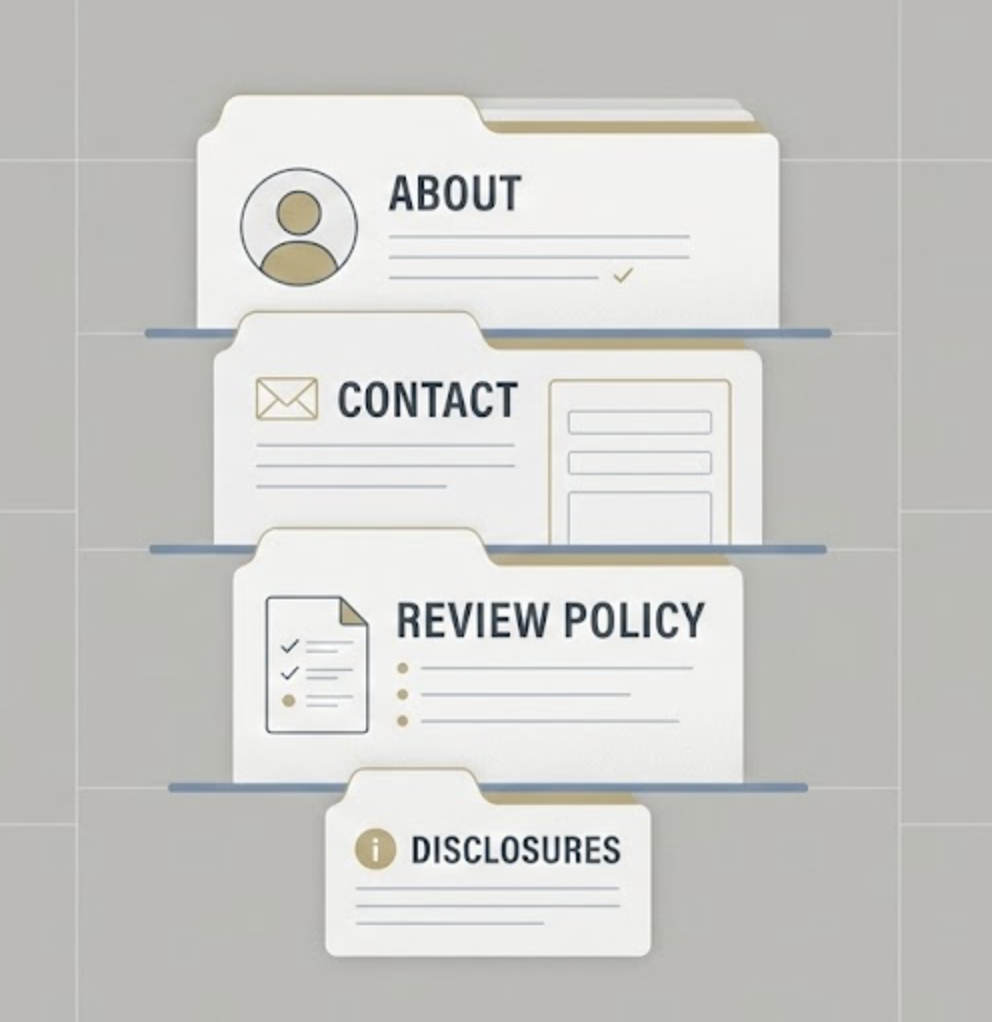
Beyond blog posts, certain pages give your book blog credibility, trust, and professionalism. Readers may not visit them often, but when they do, these pages shape how seriously they take your blog.
About and Contact Pages
Your About page answers one core question: why should someone listen to you about books.
A strong About page includes:
Who you are as a reader
What kind of books you love
Why you started the blog
What readers will gain by following you
This page is not about impressing people. It is about building connection.
Your Contact page makes your blog feel real and reachable. It allows:
Readers to share feedback
Authors or publishers to reach out
Collaboration opportunities to find you
Review Policy and Disclosures
If you plan to review books, especially free or sponsored copies, you need transparency.
A Review Policy page explains:
How you choose books to review
Whether reviews are honest and unbiased
If you accept review copies
Disclosures are important if you use:
Affiliate links
Sponsored content
These pages protect you legally and build reader trust.
Honesty is the currency of book blogging.
Book Blog Content Strategy
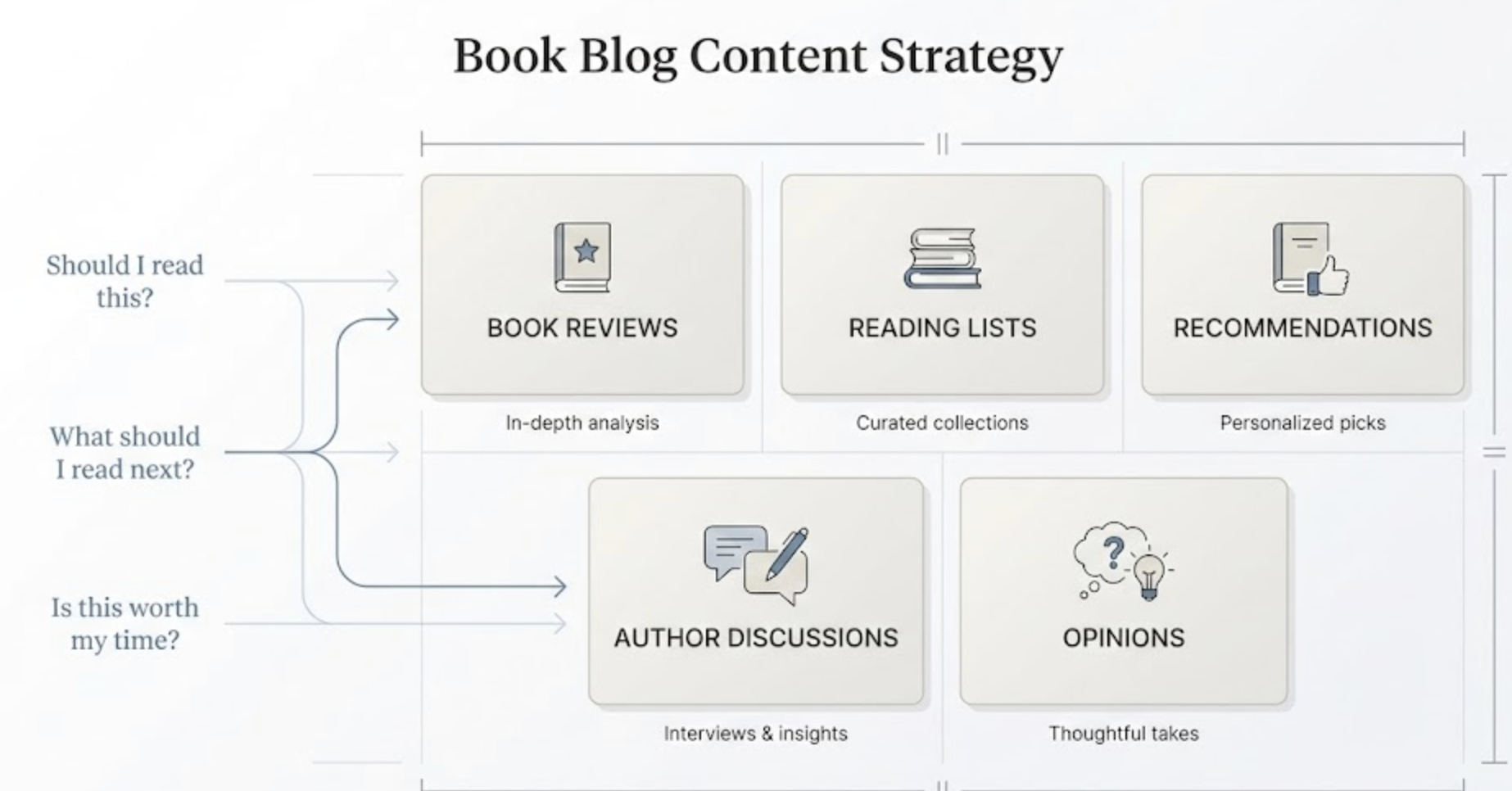
Content is what turns a book blog from a personal journal into a destination readers return to. Strategy does not mean rigidity. It means knowing what you are writing and why.
What to Write About as a Book Blogger
As a new book blogger, your goal is not to review everything. Your goal is to be helpful and consistent.
Start with:
Books you genuinely enjoyed or disliked
Genres you already read regularly
Questions readers often ask about books
Think in terms of reader intent:
Should I read this book
What should I read next
Is this book worth my time
If your post helps answer one of these, it is valuable.
Clarity beats volume. Ten helpful posts outperform fifty random ones.
Core Book Blog Content Types
A strong book blog usually relies on a few repeatable formats.
Book Reviews
Reviews are the backbone of most book blogs.
Good reviews focus on:
Who the book is for
What worked and what did not
How the book made you feel
Avoid rewriting the synopsis. Readers want insight, not summaries.
Reading Lists and Recommendations
These posts help readers discover books faster.
Examples include:
Best books for beginners
Books to read if you liked a certain author
Genre specific recommendations
These posts perform very well in search and get shared often.
Author Discussions and Opinions
Opinion pieces and discussions help differentiate your blog.
Use them to:
Explore themes
Compare authors
Share reading perspectives
These posts build loyalty because they sound uniquely you.
Writing Great Book Blog Content
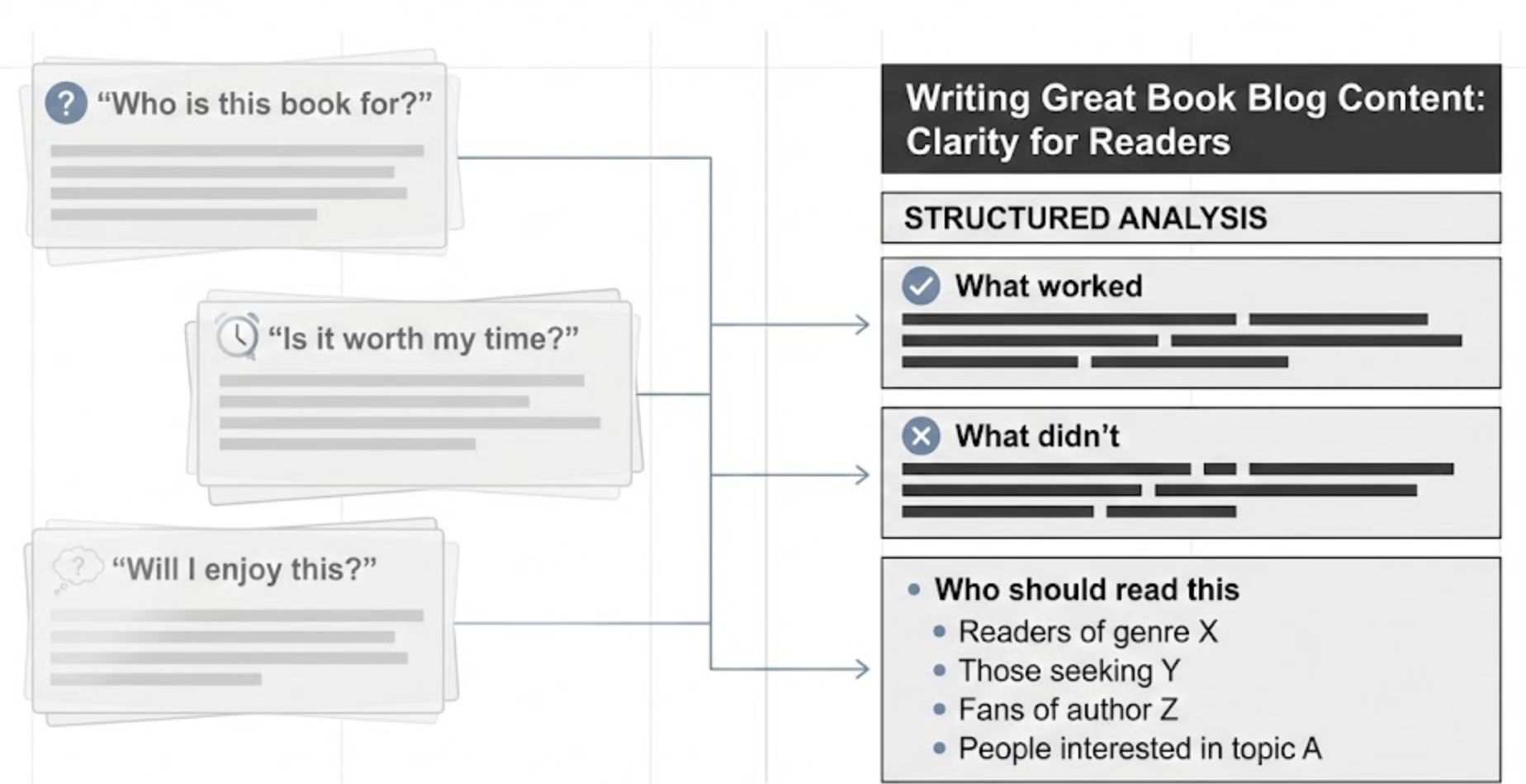
Great book blogs are not built on perfect grammar or fancy words. They are built on clarity, honesty, and reader empathy. Your job is not to impress. Your job is to help another reader decide what to read next.
Writing Honest and Helpful Book Reviews
An honest review is more valuable than a positive one.
A strong book review answers:
Who should read this book
Who might not enjoy it
What the book does well
Where it falls short
Instead of saying “this book was amazing,” explain why it worked for you. Was it the pacing, the characters, the ideas, or the writing style?
Readers trust bloggers who:
Share real opinions
Criticize respectfully
Avoid hype
Trust is built when readers feel you are reading for them, not performing for publishers.
Formatting Posts for Better Readability
Most people scan before they read.
Make your posts easy to consume by:
Using short paragraphs
Breaking text with subheadings
Highlighting key takeaways
Adding lists where useful
Grigora’s editor makes this easy by keeping formatting simple and distraction free.
If a reader can skim your post and still understand it, you have done your job well.
SEO Basics for Book Blogs
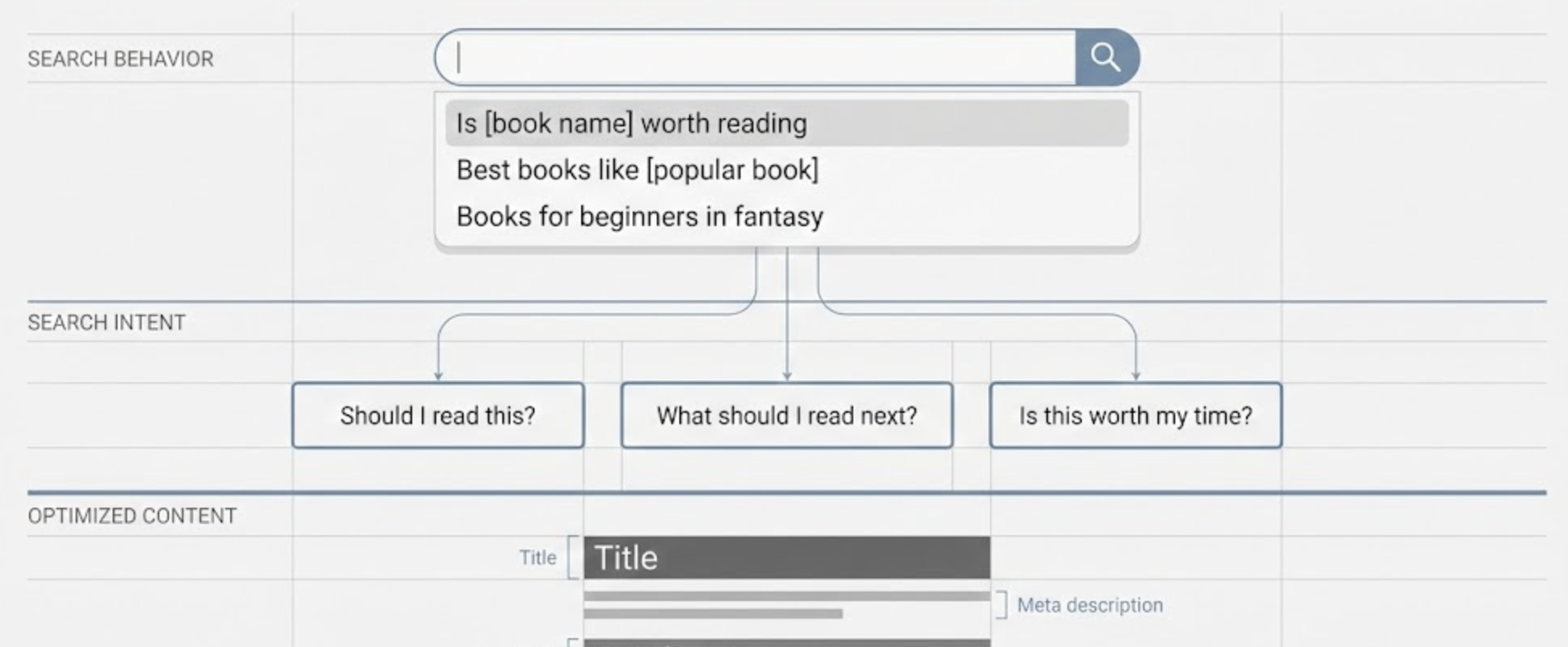
Basic SEO, done consistently, is enough to grow a book blog.
Keyword Research for Book Content
Keyword research helps you understand how readers search for books online.
Keyword research helps you understand how readers search for books online.
Search your book or topic on Google
Look at autocomplete suggestions
Check “People also ask” questions
As a beginner, focus on:
Long tail keywords
Book specific queries
Question based searches
Examples:
“Is [book name] worth reading”
“Best books like [popular book]”
“Books for beginners in fantasy”
These keywords have clear intent and are easier to rank for.
Write for readers first, then align with search behavior.
On Page SEO Essentials
Every book blog post should follow a few on page SEO basics.
Optimize:
Your title with the main keyword
Headings that structure the post clearly
Short, readable paragraphs
Internal links to related posts
Grigora makes this easy with built in SEO fields for:
Meta titles
Meta descriptions
Clean URLs
You do not need plugins or technical setup.
Good SEO is about clarity, not keyword stuffing.
Monetizing a Book Blog
Monetization should never come before trust. Readers come to book blogs for honest opinions, not sales pitches. If you focus on helping readers first, monetization becomes a natural extension, not an interruption.
When to Start Monetizing
You are ready to monetize when:
You have consistent traffic
Readers engage with your content
People trust your recommendations
This does not require massive numbers. Even a few thousand monthly readers can be enough if your niche is clear.
Do not rush monetization. Rushed money costs long term credibility.
Common Monetization Methods
Affiliate Links
Affiliate links are the most natural fit for book blogs.
You earn a commission when readers:
Buy books you recommend
Purchase reading related products
Always disclose affiliate links and only recommend books you genuinely stand behind.
Sponsored Posts
Publishers or authors may pay for sponsored content.
If you accept sponsorships:
Be transparent
Maintain editorial control
Keep reviews honest
Readers respect honesty more than positivity.
Display Ads
Display ads work best when:
Your blog has steady traffic
Pages load fast
Ads do not ruin reading experience
Grigora’s performance focused setup helps maintain speed even as your blog grows.
Conclusion
Key Steps to Start a Book Blog With Grigora
Starting a book blog is not about being the loudest voice online. It is about being a consistent, honest, and helpful one.
If you strip everything down, the process looks like this:
Choose a clear book blog niche you can sustain
Build your blog on a simple, reliable platform like Grigora
Use a clean, reader first template
Publish thoughtful content consistently
Apply basic SEO so readers can find you
Grow through community, not shortcuts
Frequently Asked Questions
Can I start a book blog without technical skills
Yes. Grigora is built for non technical creators. You do not need coding knowledge, plugins, or hosting setup to start and manage a book blog.
How does Grigora help in creating a book blog
Grigora provides an all in one platform with ready made blog templates, a built in CMS, SEO tools, performance optimization, and simple customization. This lets you focus on content instead of maintenance.
Are there ready made book blog templates in Grigora
Yes. Grigora offers multiple book blog templates, including minimal review layouts, author focused blogs, and reading list based designs, all optimized for readability.
How long does it take to grow a book blog
Most book blogs start seeing meaningful traffic in 6 to 12 months if content is published consistently and SEO basics are followed.
Is book blogging still worth it today
Yes. Book blogging is still valuable because readers search for trusted opinions before choosing what to read. Blogs provide depth, context, and long term value that short form content cannot replace.