

The world is a book, and those who do not travel read only one page.
Saint Augustine
Starting a travel blog is no longer about showing perfect photos or bragging about destinations. Today, it is about sharing experiences, solving problems for readers, and building a personal media asset you truly own. A travel blog lets you document journeys, help others travel better, and over time, turn your passion into a sustainable income stream.
Unlike social platforms where content disappears in feeds, a travel blog compounds. A post written today can bring readers, traffic, and revenue years later. That is why travel blogging still works, even in 2026.
A travel blog is a website where you publish travel related content such as destination guides, travel tips, itineraries, and personal stories. To start a travel blog, you need a clear niche, a blogging platform, consistent content, basic SEO, and a long term growth mindset. With modern tools like Grigora, you can create and manage a travel blog without technical skills.
Why Travel Blog Still Works

A travel blog is not just an online diary. At its core, it is a content platform built around travel focused problems and experiences.
A successful travel blog usually includes:
Practical travel guides
Honest travel tips
First hand experiences
Helpful visuals and itineraries
What makes travel blogs powerful is search intent. People actively search for things like:
“Best places to visit in Bali”
“How to travel on a budget in Europe”
“Solo travel tips for beginners”
Blogs answer these questions better than social posts ever can.
Travel blogs still work because:
Google still rewards high quality, helpful content
Readers trust long form guides over short videos
Blogs build authority and credibility over time
Who Should Start a Travel Blog Today
Travel blogging is not limited to full time travelers or influencers.
You should start a travel blog if:
You enjoy writing or sharing experiences
You want to build a long term online asset
You travel occasionally or frequently
You want freedom from social media algorithms
You do not need to travel every week. Many successful travel bloggers started by writing about:
Past trips
Weekend getaways
Local travel
Budget travel strategies
If you can help someone travel better, you can start a travel blog.
Choosing Your Travel Blog Niche
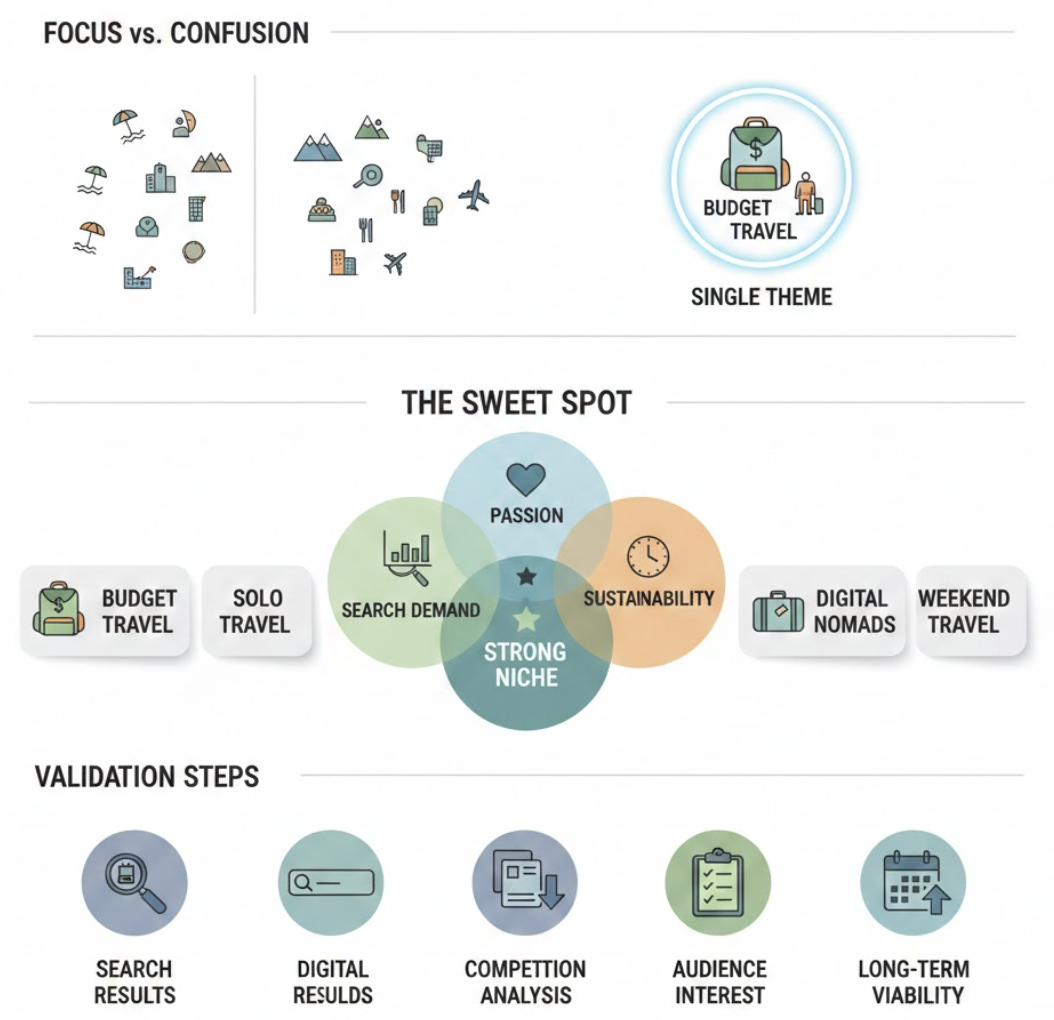
Most travel blogs fail not because the writer is bad, but because the blog tries to cover everything for everyone. A clear niche gives your blog focus, direction, and a real chance to grow.
Picking the Right Travel Blog Topic
A travel blog niche is simply the main angle or theme your content revolves around.
Good travel blog niches sit at the intersection of:
What you enjoy writing about
What people actively search for
What you can realistically sustain long term
Popular and proven travel blog niches include:
Budget travel and backpacking
Solo travel experiences
Luxury or slow travel
Digital nomad lifestyle
Food and culture focused travel
Weekend or local travel
Instead of “travel,” think in terms of specific problems and audiences. For example, “budget travel in Southeast Asia” is far more powerful than a generic travel blog.
Clarity beats creativity at the beginning.
Validating Your Niche Idea
Before you commit, validate your niche. This saves months of wasted effort.
A simple validation checklist:
Search your niche topic on Google
Check if blogs already rank for it
Look at how detailed those articles are
Ask yourself if you can write better or differently
If people are already searching for content in that niche, it is a good sign. Competition is not a bad thing. It means demand exists.
You should also ask:
Can I write 30 to 50 posts on this topic?
Will I still enjoy this niche after one year?
If the answer is yes, you have a viable niche.
Branding Your Travel Blog
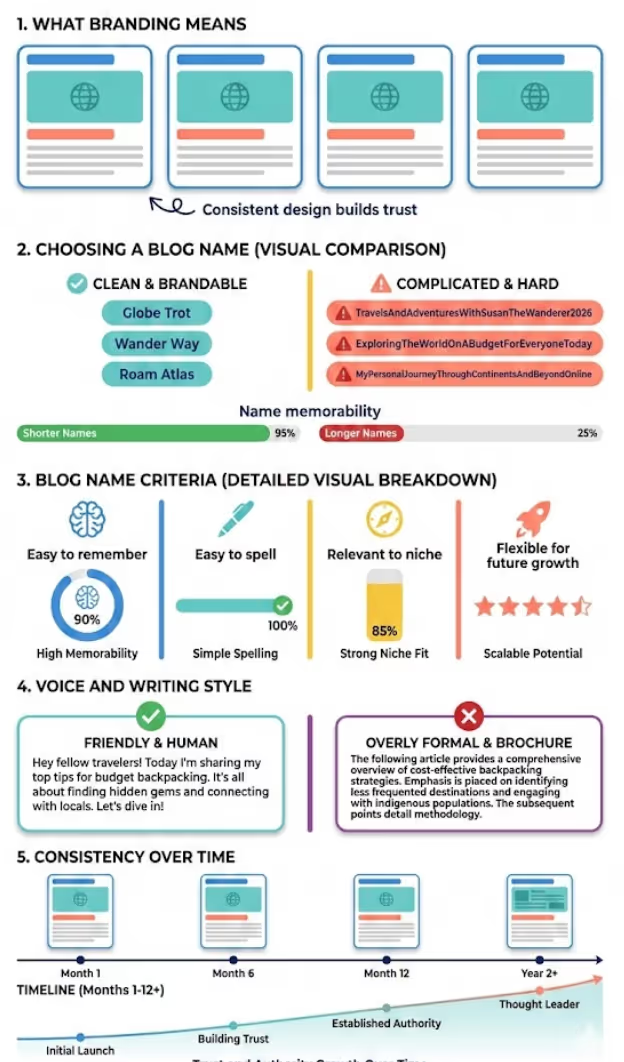
Branding is what makes your travel blog recognizable and trustworthy, even before people read a single post. It is not about fancy logos. It is about clarity and consistency.
Choosing a Blog Name
A good travel blog name should be:
Easy to remember
Easy to spell
Relevant to your niche
Flexible for future growth
Avoid names that are too long or overly clever. Your name does not need to explain everything. It just needs to be brandable.
Good examples:
Two to three words
Simple and readable
Not tied to one destination only
Before finalizing, always check: Is the name available as a domain? Are social media handles available? Does it resonate with your niche?
Domain availability
Social handle availability
Your blog name is the foundation of your brand. Choose it carefully, but do not overthink it.
Defining Your Voice and Style
Your voice is how readers recognize you.
Decide early:
Will your tone be friendly or professional?
Will you write as a guide or as a storyteller?
Will your content be casual or detailed?
The most successful travel blogs sound human, not polished like brochures.
Consistency matters more than perfection.
How to Create a Travel Blog Using Grigora
This is where most beginners feel stuck. Domains, hosting, themes, settings. The good news is you no longer need to be technical to start a travel blog.
Grigora simplifies the entire process so you can focus on writing and growing, not configuring tools.
Why Use Grigora for a Travel Blog
Grigora is built for creators who want to publish content without friction.
Grigora works well for travel blogs because:
It is no code and beginner friendly
It has a built in CMS and blogging system
It supports SEO, performance, and analytics out of the box
It scales from your first post to hundreds of articles
Instead of stitching together WordPress, plugins, hosting, and themes, Grigora gives you everything in one place.
Less setup. More writing. Faster results.
Setting Up Your Blog in Grigora
Creating your travel blog in Grigora takes minutes, not days.
Creating Your Site
You start by:
Creating a new site inside Grigora
Choosing a blog focused setup
Connecting your custom domain when ready
No hosting setup. No plugin installation. Everything is already configured.
Choosing a Theme
Grigora offers clean, responsive themes designed for readability.
When choosing a theme:
Prioritize readability over visuals
Make sure it looks good on mobile
Choose a layout that highlights images and text equally
You can customize colors, fonts, and layout later. Start simple.
Setting Up Pages
Every travel blog needs a few essential pages:
Homepage to highlight your content
Blog page for all posts
About page to build trust
Contact page for collaborations
Grigora makes page creation straightforward with a visual editor and structured blocks.
At this point, your travel blog is live.
Writing and Publishing Your First Travel Post
Your first post does not need to be perfect. It needs to exist.
A good first post could be:
A destination guide you know well
A travel experience you learned from
A helpful beginner guide
In Grigora, you:
Open the blog editor
Write using a clean distraction free interface
Add images where they add value
Publish with one click
Writing your first post is the real start of your travel blog.
Managing Content With Grigora CMS
As your blog grows, content management matters.
Grigora’s CMS helps you:
Organize posts by categories
Edit and update old content easily
Track performance and engagement
Scale content without slowing down
This is important because successful travel blogs are built by updating and improving content over time, not just publishing once.
Designing Your Travel Blog
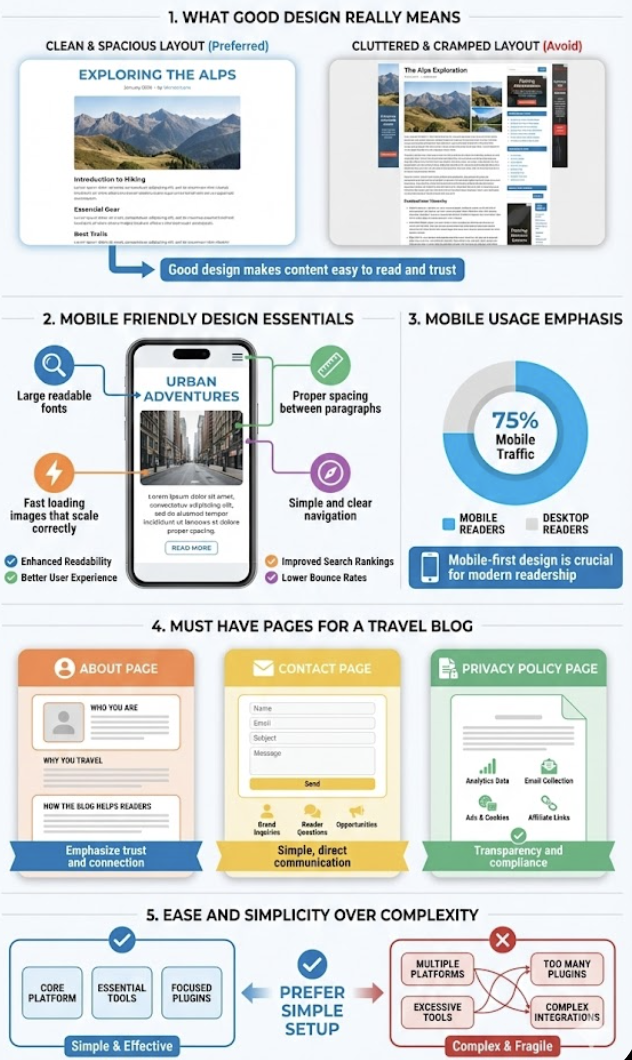
Design is not about impressing visitors. It is about making content easy to read, trust, and navigate. A good design disappears and lets your stories shine.
Mobile Friendly Design Essentials
Most travel blog readers are on mobile. Your design must work perfectly on small screens.
Focus on:
Large, readable fonts
Enough spacing between paragraphs
Images that load fast and scale properly
Simple navigation
Grigora themes are mobile responsive by default, so your blog adapts automatically across devices.
If your blog is easy to read on a phone, you are already ahead of most beginners.
Creating Must Have Pages
Certain pages are essential for credibility and growth.
About Page
Your About page should answer one question clearly: why should someone trust you.
Include:
Who you are
Why you travel
How your blog helps readers
This page builds connection and loyalty.
Contact Page
A Contact page makes your blog feel real.
It helps:
Brands reach out for collaborations
Readers ask questions
Opportunities find you
Grigora lets you add a simple contact form without extra tools.
Privacy Policy Page
A Privacy Policy is required if you:
Use analytics
Collect emails
Show ads or affiliate links
Grigora makes it easy to add policy pages so your blog stays compliant from day one.
Travel Blog Content Strategy
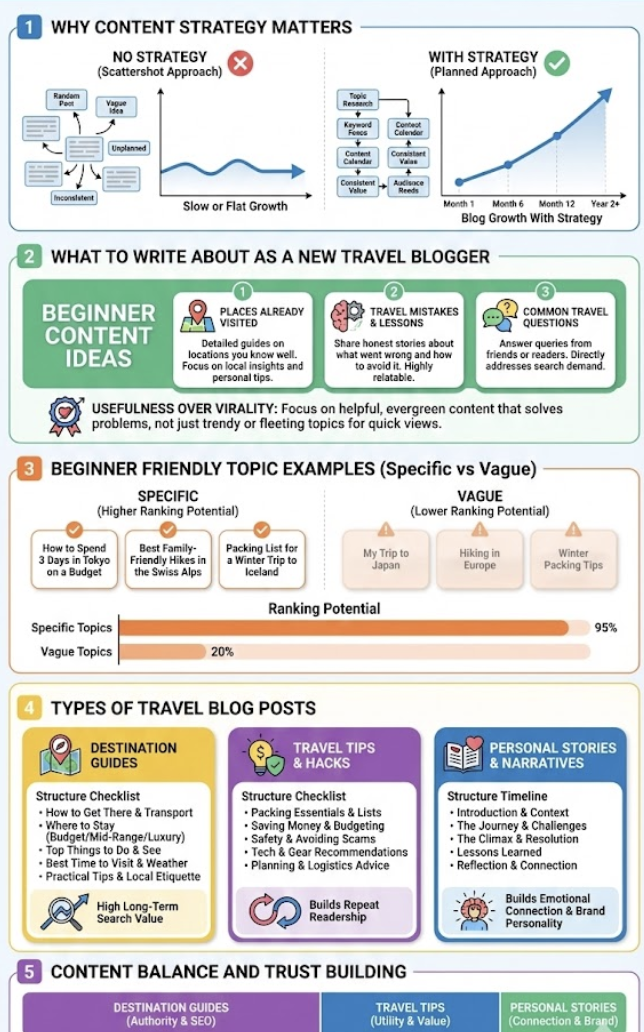
Content is the engine of your travel blog. Without a clear plan, even the best designed blog will struggle to grow. Strategy gives your writing direction and momentum.
What to Write About as a New Travel Blogger
As a beginner, your goal is not to go viral. Your goal is to be useful.
Start with topics you know well:
Places you have already visited
Travel mistakes you have learned from
Questions people often ask you about travel
Early content should focus on solving specific problems, not telling broad stories.
Good beginner topics include:
“How to travel to Goa on a budget”
“What to pack for a solo trip”
“Best weekend trips from Bengaluru”
Specific content ranks. Vague content does not.
Types of Travel Blog Posts
A strong travel blog uses a mix of formats.
Destination Guides
These are detailed posts that help readers plan a trip.
They often include:
How to get there
Where to stay
What to do
Best time to visit
Destination guides are excellent for search traffic.
Travel Tips
Travel tips solve small but important problems.
Examples:
Packing checklists
Money saving hacks
Safety tips
These posts build trust and repeat readership.
Personal Stories
Stories add personality to your blog.
Use them to:
Share lessons learned
Build emotional connection
Make your brand human
Balance stories with practical value.
SEO Basics for Travel Blogs
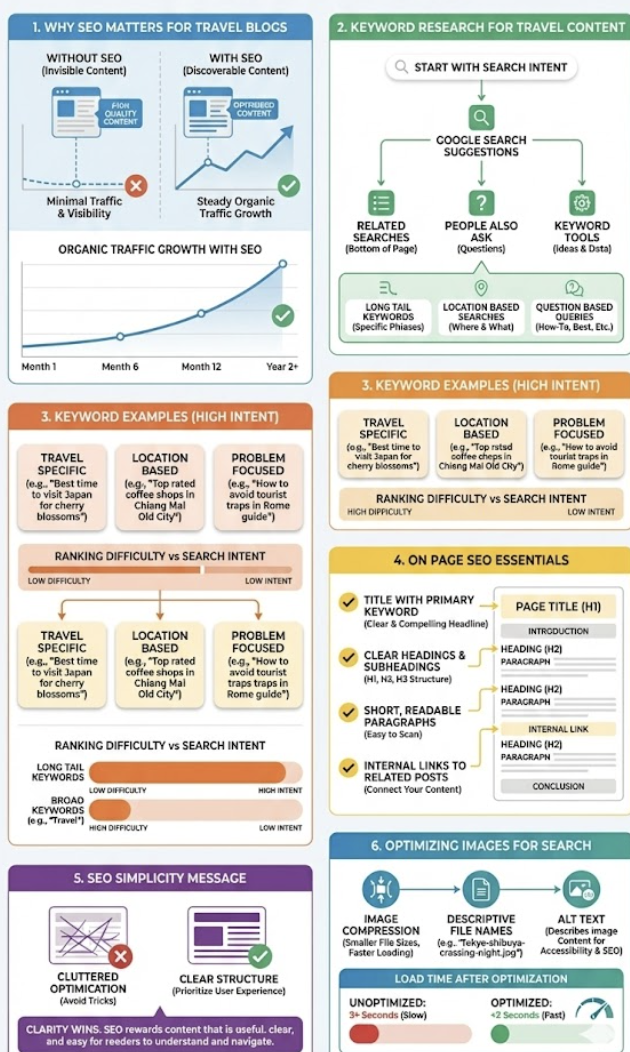
You can write the best travel content in the world, but without SEO, most people will never find it. The good news is travel blog SEO is straightforward when you focus on fundamentals.
Keyword Research for Travel Content
Keyword research helps you understand what travelers are actually searching for.
Start by:
Searching your topic on Google
Looking at suggested searches
Checking “People also ask” questions
As a beginner, target:
Long tail keywords
Location based searches
Question style queries
Examples:
“Best cafes in Ubud for digital nomads”
“How to plan a budget trip to Thailand”
These are easier to rank for and bring high intent traffic.
On Page SEO Essentials
Every travel blog post should follow basic on page SEO.
Key elements to optimize:
Title with primary keyword
Clear headings and subheadings
Short, readable paragraphs
Internal links to related posts
Grigora helps with built in SEO fields, so you can add meta titles, descriptions, and slugs without plugins.
SEO is about clarity, not tricks.
Optimizing Images for Search
Images are a big part of travel blogs, but they can slow your site if not handled correctly.
Best practices:
Compress images before uploading
Use descriptive file names
Add alt text for accessibility and SEO
Grigora automatically optimizes images so your blog stays fast without extra effort.
Promoting and Growing Your Travel Blog
Publishing great content is only half the work. Growth happens when the right people discover your blog and keep coming back. Promotion does not mean spamming links everywhere. It means being intentional.
Sharing Content on Social Platforms
Social platforms are distribution channels, not content homes.
Use them to:
Share snippets from your blog posts
Highlight key tips or visuals
Drive readers back to your site
Pick one or two platforms you enjoy using. For travel blogs, Pinterest, Instagram, and X work well when used consistently.
Your blog is the asset. Social media is the amplifier.
Do not try to be everywhere. Be useful where you show up.
Building an Email List
An email list is one of the most valuable things you can build as a travel blogger.
Why it matters:
You own the audience
No algorithm controls reach
Readers are already interested in your content
Start simple:
Add a signup form to your blog
Offer updates or exclusive tips
Send emails occasionally, not aggressively
Even a small list of engaged readers beats thousands of passive followers.
Monetizing a Travel Blog
Monetization should be a byproduct of value, not the starting point. The biggest mistake new bloggers make is trying to earn before they help. Focus on content first. Revenue follows naturally.
When to Start Monetizing
You should start monetizing when:
You have consistent traffic
Readers trust your recommendations
Your content solves real problems
This can happen sooner than you think, sometimes with just a few thousand monthly visitors.
Do not wait for perfection. Wait for proof of demand.
Popular Monetization Methods
Affiliate Links
Affiliate marketing is the most common way travel blogs earn.
You earn a commission when readers book:
Hotels
Flights
Travel gear
Tours
Only recommend products you genuinely trust. Long term income depends on credibility.
Sponsored Content
Brands pay bloggers to feature destinations, hotels, or services.
To attract sponsorships:
Build a clear niche
Show engagement, not just traffic
Maintain editorial honesty
Sponsored content should still be useful to readers.
Display Ads
Display ads pay based on impressions.
They work best when:
You have high traffic
Your site loads fast
Ads do not ruin user experience
Grigora’s performance focused setup helps keep your site fast even with ads.
Common Mistakes to Avoid
Most travel blogs fail for predictable reasons. Avoiding these mistakes early can save you months of frustration.
Blogging Without a Strategy
Writing randomly leads to random results.
Without a strategy:
Posts do not connect
SEO suffers
Growth stays slow
Always know:
Who you are writing for
What problem the post solves
How it fits into your bigger content plan
Consistency beats inspiration.
Ignoring SEO and Consistency
SEO is not optional for blogs. Neither is showing up regularly.
Common errors include:
Publishing once and disappearing
Ignoring keyword intent
Not updating old content
Successful travel blogs are built by small, consistent actions over time.
Conclusion
Key Steps to Start a Travel Blog
Starting a travel blog is not about being the best writer or traveling the most. It is about starting with clarity and staying consistent.
The core steps are simple:
Choose a clear travel niche
Build your blog on a reliable platform like Grigora
Publish helpful, search focused content
Design for readability and mobile users
Learn basic SEO and apply it consistently
Promote intentionally and build an email list
When done right, a travel blog becomes a long term asset that grows with you.
Final Tips for Long Term Success
Success in travel blogging comes from patience.
Focus on:
Writing content that genuinely helps
Improving older posts instead of chasing new trends
Building trust before monetizing
Treating your blog like a business, not a hobby
If you stay consistent for one year, you will already be ahead of most people who start.
FAQs
Can I start a travel blog without technical skills
Yes. Platforms like Grigora are designed for non technical users. You can create, manage, and publish a travel blog without coding or complex setup.
How does Grigora help in creating a travel blog
Grigora provides an all in one platform with hosting, CMS, themes, SEO tools, and performance optimization. This allows you to focus on content instead of technical maintenance.
How long does it take to grow a travel blog
Most travel blogs take 6 to 12 months to see meaningful traffic if content and SEO are done consistently. Growth compounds over time.
Is travel blogging still worth it today
Yes. Travel blogging is still profitable and relevant because people actively search for travel information. Blogs provide depth, trust, and long term value that short form content cannot replace.