Terms and Conditions Generator
Generate comprehensive terms & conditions for your website or app step by step.
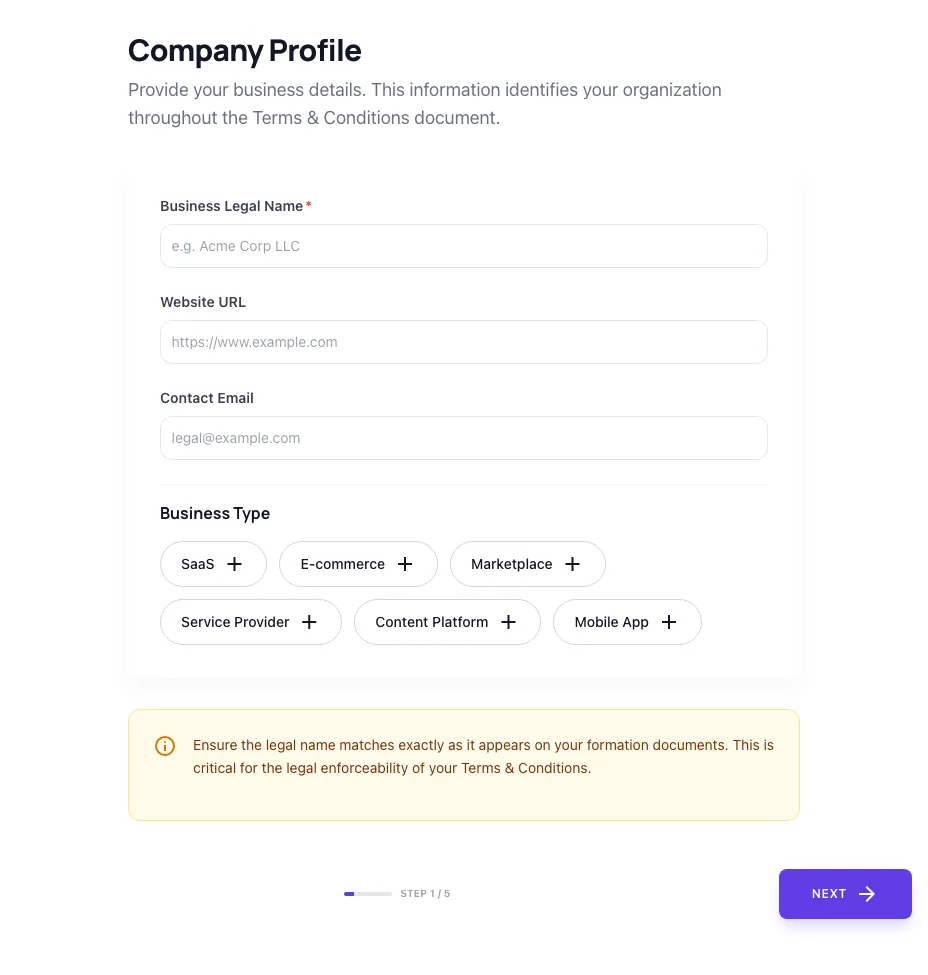
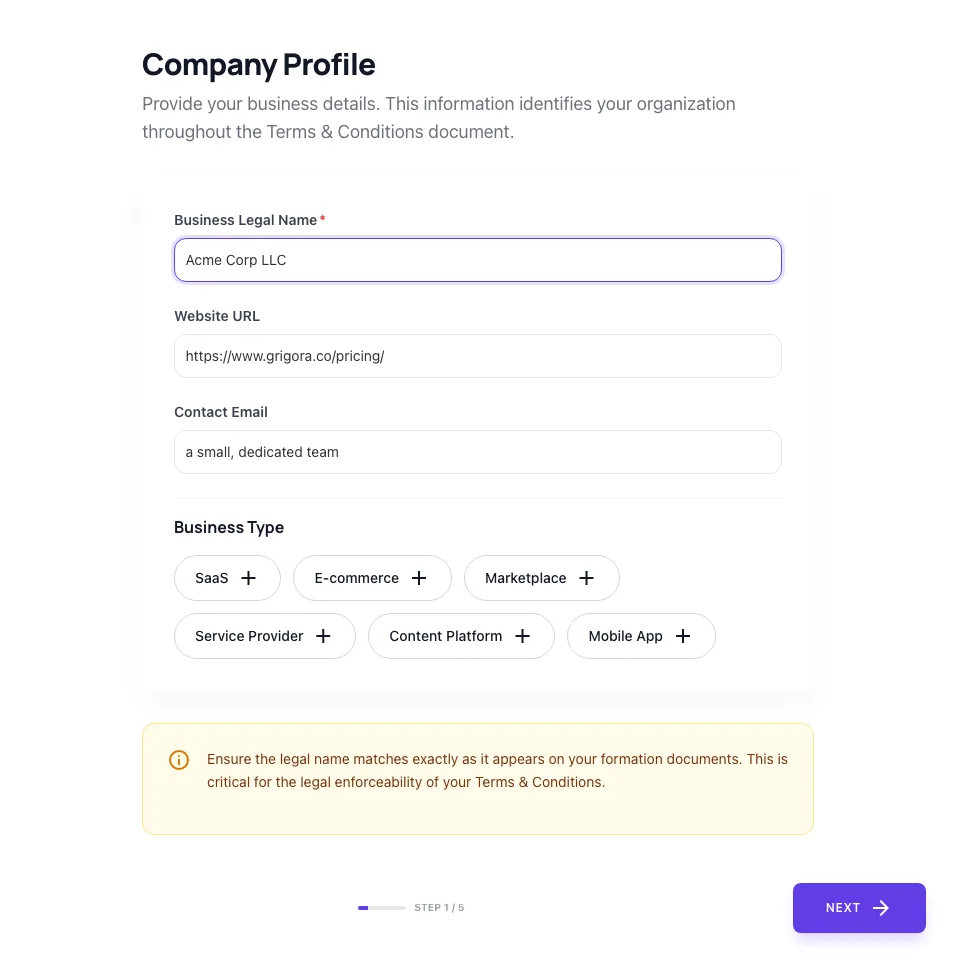
Company Profile
Provide your business details. This information identifies your organization throughout the Terms & Conditions document.
Business Type
Ensure the legal name matches exactly as it appears on your formation documents. This is critical for the legal enforceability of your Terms & Conditions.
How to use the Terms And Conditions Generator, step by step
Real screenshots of the tool, taken while running it.
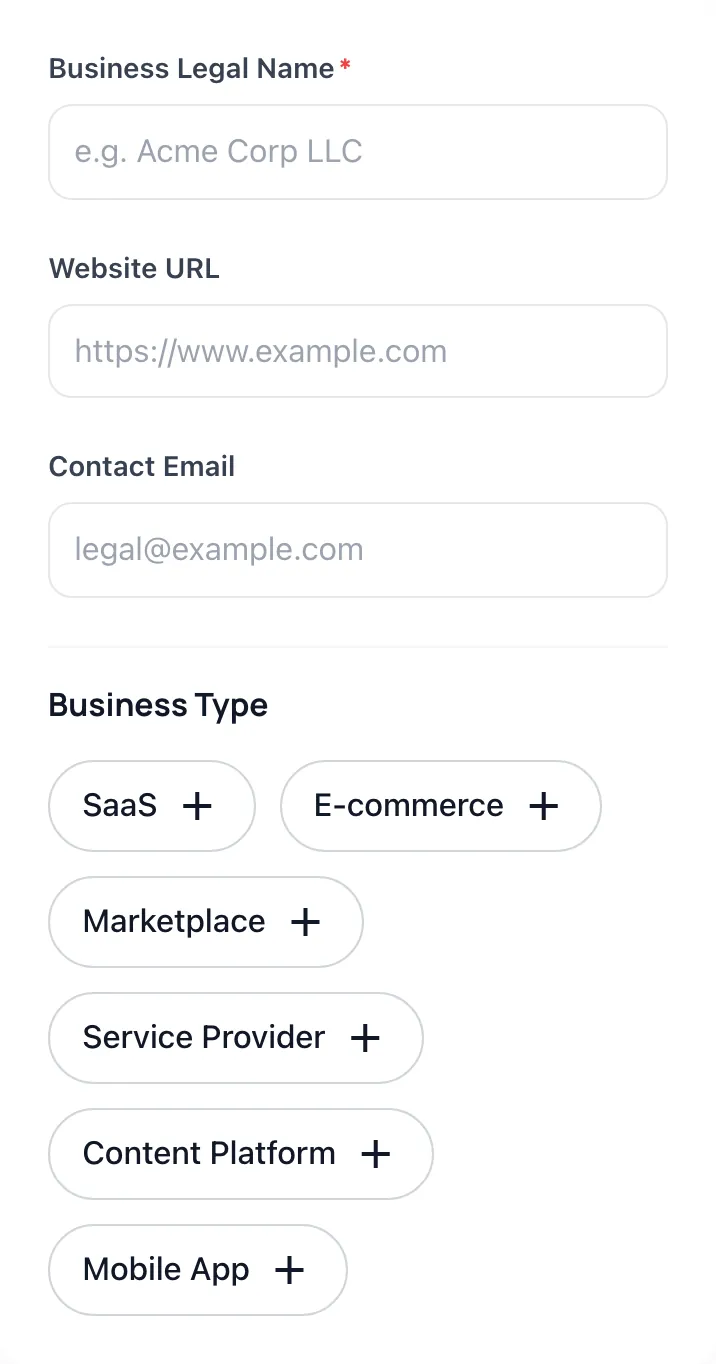
- 1
Add your input
Paste or type into the field Terms And Conditions Generator works from.
- 2
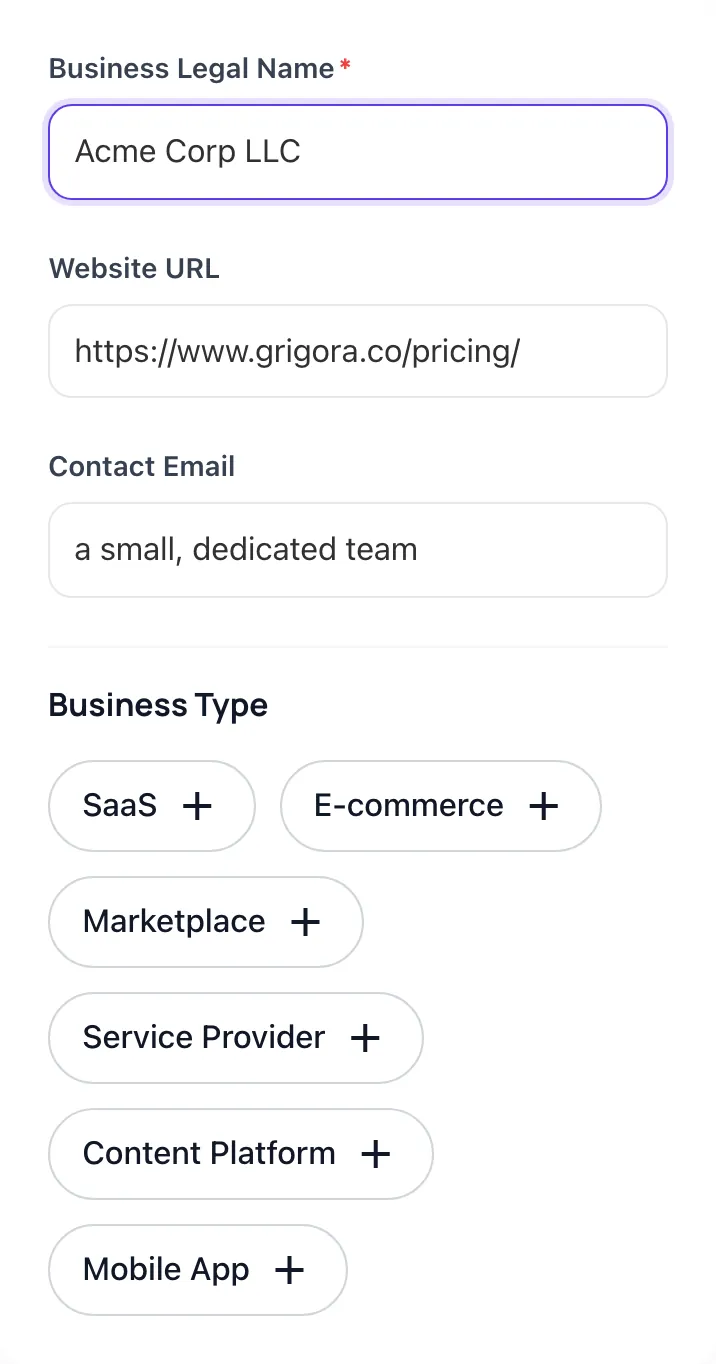
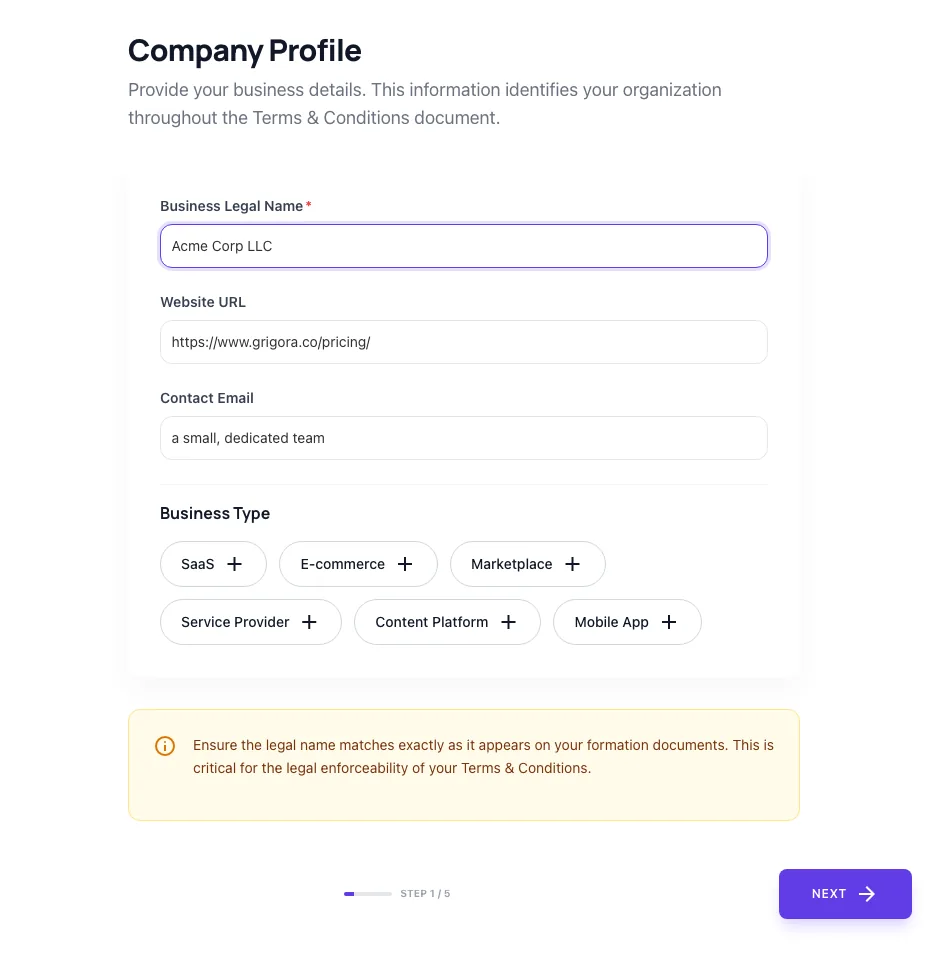
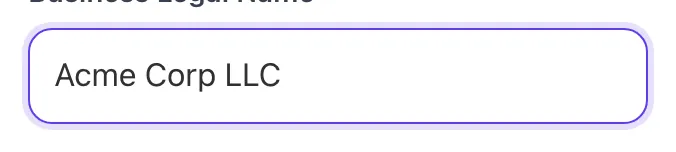
Sample text in place
With sample text entered, Terms And Conditions Generator is ready to run.
- 3
Read the result
Terms And Conditions Generator updates as you type, so the result is already visible here.
What this tool does
Terms and Conditions Generator delivers fast, reliable results for generate comprehensive, lawyer-grade terms and conditions for your website or app in seconds. free, customizable.
Designed to fit into your existing SEO and content workflow with no setup overhead.
How to use it
Five steps.
Enter your business name and country
These pre-fill jurisdiction, governing law, and consumer protection clauses appropriate for your location.
Select your business type and industry
Choose SaaS, e-commerce, marketplace, content platform, freelance services, or mobile app for industry-specific clauses.
Toggle compliance requirements
Enable GDPR, CCPA, DSA, CPRA, or industry-specific regs that apply to you; the generator inserts the required provisions.
Customize liability and arbitration preferences
Choose limitation-of-liability cap, whether to include arbitration with class waiver, and dispute resolution jurisdiction.
Review, copy, and integrate
Preview the full document, copy as Markdown or HTML, paste into your CMS or app, and add an acceptance checkbox at signup or checkout.
When teams use it
Six common workflows.
Launching a new SaaS or web app
Before any user signup, T&C must be in place: governs account creation, billing, IP ownership of user data, acceptable use, dispute resolution. Skipping this opens the door to refund disputes, IP claims, and class actions that drain cash and time.
Setting up an e-commerce store
Stripe, PayPal, and Shopify all require sites to have T&C before accepting payments. Plus, e-commerce-specific provisions (returns, refunds, warranty disclaimers, taxes) directly affect chargeback dispute outcomes; well-drafted T&C reduce chargeback losses by 30-50%.
Operating a marketplace or platform
Marketplaces have unique liability exposure: the platform mediates transactions between buyers and sellers, with potential liability for fraud, unsafe products, or non-delivery. T&C must clearly disclaim platform liability and shift it to participating users with indemnification.
Running a content site with user comments
Any site accepting user comments, reviews, or uploads needs DMCA designated agent registration and clear UGC license terms. Without these, the site loses Section 230 safe harbor and becomes liable for user content; with them, the site is protected.
Freelancers and consultants offering services
Service providers benefit from T&C even more than product sellers: defines scope of work, milestones, payment terms, IP ownership of deliverables, dispute resolution. Standard T&C save weeks of contract negotiation per client and reduce non-payment incidents.
Mobile apps in App Store and Play Store
Apple and Google both require apps to have T&C and Privacy Policy URLs in the app metadata. Generated T&C cover the specific provisions Apple and Google require (in-app purchases, content moderation, EU compliance) for approval.
Platform guides
Integrate with major platforms.
Shopify
- Generate T&C using your business type (e-commerce), country, and product category
- Go to Shopify Admin > Settings > Policies; paste into Terms of Service field
- Link from footer (auto-generated by Shopify themes when policies are set)
- Add a checkbox at checkout via Shopify Plus checkout customization or app like TermsBox
- Update annually or when adding new product categories
WordPress / WooCommerce
- Use Auto Terms of Service plugin or paste output into a new Page titled "Terms and Conditions"
- Add page to footer menu via Appearance > Menus
- For WooCommerce, set the Terms page in WooCommerce > Settings > Advanced > Page setup
- Enable terms-and-conditions checkbox at checkout via WooCommerce > Settings > Checkout
- Use Iubenda or Termageddon for ongoing compliance updates if budget allows
Webflow
- Create a new page titled Terms and Conditions; paste the generated content
- Use Webflow CMS for versioning if you expect frequent updates
- Add page to site footer linkblock
- Use Webflow Logic or a third-party form (Memberstack) to require acceptance at signup
- Set page meta tags to include schema.org/TermsOfService for SEO
Next.js / custom React app
- Save generated T&C as MDX or Markdown in your content folder
- Create a route at /terms with proper meta tags and noindex if it is a private app
- Add link from footer component
- For signup forms, add a required checkbox component that gates form submission
- Log acceptance in your database with timestamp, IP, and version number for audit
Mobile apps (iOS / Android)
- Generate T&C with mobile app provisions enabled (in-app purchases, push notifications, app permissions)
- Host T&C on a publicly accessible URL (your website or a dedicated terms page)
- Reference the URL in App Store Connect and Google Play Console listing metadata
- Show T&C and require acceptance on first app launch with a clear "I agree" button
- Update T&C URL in app stores when you republish material changes; both stores require this
Grigora vs. alternatives
Side-by-side.
| Capability | Grigora | Termly | TermsFeed | Free | Manual |
|---|---|---|---|---|---|
| Industry-specific clause customization | 12 industries | 5 industries | Generic only | 8 industries | Manual |
| GDPR / CCPA / DSA compliance options | All three | GDPR only | GDPR + CCPA | All three | Manual |
| Arbitration / dispute resolution clauses | Yes (optional) | No | Yes | Yes | Manual |
| Multi-jurisdiction support | 40+ countries | US/UK only | US/EU | 20+ countries | Manual |
| DMCA agent provisions | Yes | No | Yes | Yes | Manual |
| Versioning / change-tracking output | Yes | No | Yes (paid) | Yes | Manual |
| Free unlimited generation | Yes | Free (limited) | Paid ($16+/mo) | Paid | Free |
| Lawyer review service available | Optional partner | No | Yes (extra) | Yes (extra) | Direct |
Common errors and fixes
Eight issues users hit.
Missing acceptance mechanism
Cause: T&C is hosted but never explicitly accepted by users at signup or checkout, so users may dispute they were bound.
Fix: Add a checkbox "I agree to the Terms and Conditions" at signup or checkout; log the acceptance with timestamp and IP.
Contradicts Privacy Policy
Cause: T&C says one thing about data handling and Privacy Policy says another, creating inconsistency that fails legal review.
Fix: Reference Privacy Policy from T&C with "subject to our Privacy Policy" rather than restating data terms; update both together.
Jurisdiction clause unenforceable
Cause: You picked a jurisdiction (e.g., Cayman Islands) with no real connection to your business or users.
Fix: Choose a jurisdiction with genuine connection (your incorporated state, primary operations location); courts may refuse remote jurisdictions.
Arbitration clause too aggressive
Cause: Arbitration clause includes broad class-action waiver and one-sided fee shifting, which courts may strike entirely.
Fix: Use balanced arbitration language; allow user to opt out within 30 days of acceptance per AAA consumer guidelines.
Limitation of liability over-broad
Cause: Clause attempts to disclaim all liability including gross negligence and statutory consumer rights, which is unenforceable.
Fix: Carve out exceptions: gross negligence, willful misconduct, fraud, statutory rights; this preserves enforceability of the main clause.
No effective date or version control
Cause: T&C posted without effective date or version, so users cannot tell if they accepted current or prior version.
Fix: Add "Effective Date: [date]" and version number at top; archive previous versions on a versions page.
No DMCA designated agent
Cause: Site accepts user content but has no DMCA designated agent, losing safe harbor protection under 17 USC 512.
Fix: Register a DMCA agent with the U.S. Copyright Office ($6, dmca.copyright.gov) and list contact info in T&C.
Modification clause unilateral
Cause: T&C grants company unilateral right to change terms without user notice or consent, which courts often find unconscionable.
Fix: Require 30-day notice for material changes; allow users to terminate account if they reject changes; keep prior versions available.
Original data
2026 study.
Frequently asked questions
Twelve answers.
Related free tools
Other utilities.