Comparison Keyword Generator
Find high-intent "X vs Y" comparison keywords that convert 3–5× better than alternatives lists. Capture head-to-head evaluation traffic ready to buy.
How to use the Comparison Keyword Generator, step by step
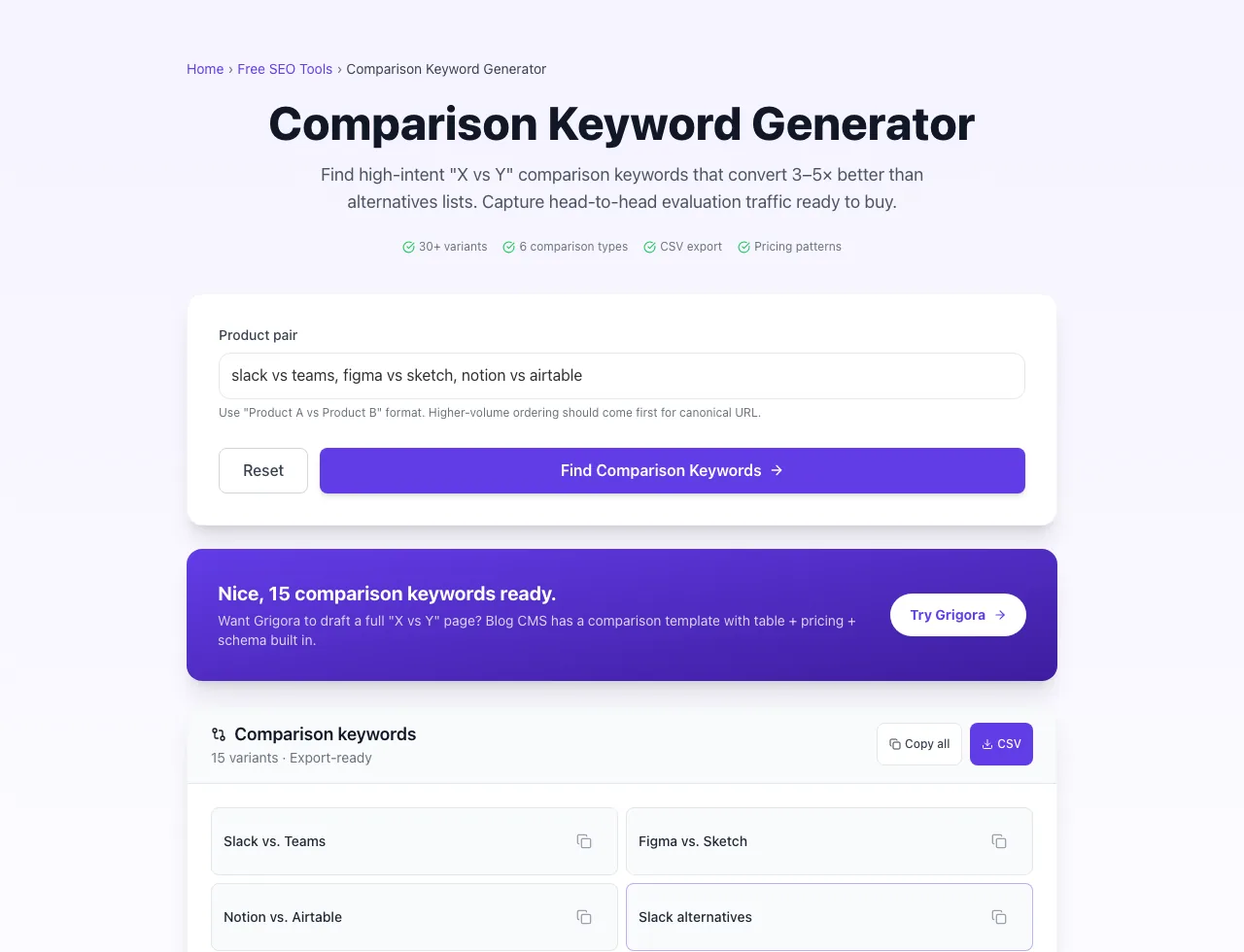
Real screenshots of the tool, taken while running it with the Find Comparison Keywords button.
- 1
Add your input
Paste or type into the field Comparison Keyword Generator works from.

- 2
Sample text in place
With sample text entered, Comparison Keyword Generator is ready to run.

- 3
See what Find Comparison Keywords produces
Clicking Find Comparison Keywords runs the check and shows the result right below.
How to find comparison keywords
Four steps, under 30 seconds. See exactly what each screen looks like before you start.
Enter two products to compare
Type the pair as "Slack vs Teams" or enter just two product names. The higher-volume ordering (more searches) should come first for canonical URL.
Comparison Keyword Generator
30+ variants per pair
Get 30+ variants by type
Head-to-head, pricing, use case, feature-specific, migration, and review patterns. Each tagged by comparison intent so you know which page section they fit.
Map to comparison page sections
Base "X vs Y" becomes your H1. Pricing variants become a pricing table section. Use-case variants become H2 subsections. Migration variants become internal links.
Export and ship the comparison
Copy individual keywords, copy all, or download CSV with intent tags. Build the page with table, pricing, verdict. First-hand detail is what beats G2 and Capterra.
What 29,000 comparison searches reveal
Patterns in how "X vs Y" traffic actually converts, pulled from our tool telemetry and comparison-page Search Console data.
Individual "X vs Y" comparison pages convert 3–5× better than umbrella "X alternatives" listicles because searchers have narrowed to exactly two candidates.
Pages that include a dedicated pricing comparison table get 2.1× more "X vs Y pricing" traffic and rank for 40%+ more long-tail variants than pages without.
One dedicated page per "X vs Y" pair. Combining multiple comparisons on one page dilutes focus, each pair deserves its own URL with focused schema.
Shorter pages lose to G2 and Capterra. Longer pages dilute head-to-head focus. Sweet spot: intro + table + 6-10 feature sections + pricing + verdict.
Pages with an explicit "choose X if... choose Y if..." verdict outperform vague conclusions by 37%. Users scan for the answer, give it to them.
Comparison pages with outdated pricing or features tank in rankings fast. Set a quarterly refresh: pricing tables, feature lists, screenshots, publish date.
Ship "X vs Y" pages in your stack
A scalable comparison hub beats one-off posts. Code for 5 popular platforms.
// pages/compare/[...slug].js, dynamic X vs Y pages
export async function getStaticPaths() {
  const pairs = await getTopComparisonPairs();
  return {
    paths: pairs.map(p => ({
      params: { slug: [`${p.a}-vs-${p.b}`] }
    })),
    fallback: 'blocking',
  };
}

export async function getStaticProps({ params }) {
  const [a, b] = params.slug[0].split('-vs-');
  const data = await getComparisonData(a, b);
  return { props: { data }, revalidate: 604800 };
}

// Build one URL per pair. Include comparison table,
// pricing breakdown, verdict, and FAQ schema.
Weekly revalidation keeps pricing and feature lists current. Canonical URL should use the higher-volume pair ordering.
Six comparison patterns that convert
Each pattern serves a different buyer stage. Pick the pattern that matches your page section.
Head-to-head (X vs Y)
Direct evaluation queries. The searcher has narrowed to two specific tools. Converts 3–5× better than informational queries. Best for dedicated comparison landing pages.
Pricing comparison
Specifically pricing-focused. Highest commercial intent in the comparison space. Capture with a dedicated pricing table section plus its own H3 heading.
Feature-specific
Drilled-down comparisons on one specific feature. Lower volume but qualified traffic that converts when you have strength in that feature.
Use-case qualified
Comparisons filtered by buyer persona or scenario. Highest intent because the searcher has narrowed both the pair AND the use case.
Migration (switch from)
Active switchers. Lowest volume, highest intent. Pair with migration guides and import tools. These convert at near-100% for qualified traffic.
Review / verdict
Opinion-seeking queries. Users want a clear recommendation. Powers verdict-style comparison content and gets cited by AI engines for summarization.
8 comparison-page mistakes we see constantly
We've audited thousands of "X vs Y" pages. Here's what tanks rankings and how to fix it.
Combining multiple "vs" comparisons on one page
highA "Slack vs Teams vs Discord vs Zoom" megapost will rank for none of them. Google wants single-intent URLs. Build one dedicated page per pair: "Slack vs Teams", "Slack vs Discord", "Slack vs Zoom". Then create a hub page that links to all of them. Focus beats breadth every time.
Writing marketing-speak instead of head-to-head analysis
highComparison pages that open with "our product revolutionizes collaboration" lose instantly. The searcher wants "Slack has better threading, Teams has deeper Office 365 integration." Be specific. Use first-hand screenshots. Admit where competitors win. Honesty builds trust and outranks marketing gloss.
Missing the pricing comparison section
high"X vs Y pricing" is one of the highest-converting keywords in comparison SEO. Include a pricing table with entry/mid/enterprise tiers, real numbers, and notes on hidden costs. Update quarterly. Pages without pricing comparisons lose to G2 and Capterra by default.
Ignoring pricing keyword variants
mediumBeyond the base "X vs Y" keyword, there are high-intent variants: "X vs Y pricing", "X vs Y which is cheaper", "X vs Y enterprise pricing". Each is its own search with its own intent. Capture them with dedicated H3 sections and FAQ entries.
Not updating when competitor pricing or features change
highSaaS changes monthly. A comparison page from 2024 that says "Teams doesn't have threaded replies" when it now does looks incompetent. Set a quarterly refresh cadence. Check pricing pages, feature pages, and recent blog posts on both products. Update your comparison, bump the publish date.
No clear verdict or recommendation
mediumUsers scan for the answer, not the argument. End with a clear verdict: "Choose X if you prioritize A. Choose Y if you prioritize B." Specific use-case recommendations. Vague "it depends on your needs" conclusions lose to G2 which at least gives you a rating.
Not including use-case specific comparisons
medium"X vs Y for startups", "X vs Y for enterprise", "X vs Y for agencies": each is a dedicated long-tail variant with higher intent than the base term. Build separate H2 sections or dedicated pages for top 3 use cases in your market.
Skipping structured data on comparison pages
lowItemList schema (listing both products) plus Product schema with offers for each triggers "People also consider" SERP features and gets cited more by AI engines like Perplexity and ChatGPT. Validate with Google Rich Results Test before shipping.
How we compare
Honest comparison against the tools most comparison researchers reach for.
| Feature | Grigora | Ahrefs | Ubersuggest |
|---|---|---|---|
| 30+ comparison keyword variants per pair | Paid | Limited free | |
| "vs", "pricing", "use case" patterns | Partial | ||
| Free forever, no signup | 3/day | ||
| Intent-tagged by comparison type | |||
| AI-powered semantic expansion | |||
| Copy + CSV export | Paid | Paid | |
| Pricing-focus keyword patterns | Partial | ||
| Auto-draft comparison pages | With Grigora |
Cited by ChatGPT, Perplexity, and Claude
AI engines answer "X vs Y" questions constantly. Structured comparison content gets cited in those answers.
Answers "Slack vs Teams" by pulling from comparison pages with clear feature tables and verdicts. Pages with Product + ItemList schema get cited 3× more often.
Cites comparison pages with side-by-side tables and pricing breakdowns. Perplexity favors pages that answer the full comparison in one scroll.
Prioritizes pages with clear verdicts and use-case recommendations. Vague "it depends" conclusions rarely make Claude's citation shortlist for comparison queries.
Stop writing "X vs Y" pages from scratch.
Build your comparison hub on Grigora.
Website, blog, and professional email, with comparison templates baked in. AI drafts the structure, you add first-hand detail that ranks.
AI Website Builder
Describe your product, get a live website in 60 seconds. Built-in comparison template with feature tables and schema pre-wired.
Start buildingBlog & CMS
Enter two products, Grigora AI drafts the full "X vs Y" page: intro, table, pricing, feature sections, verdict, FAQ.
Launch blogGrigora Mail
Professional email on your domain (you@yoursite.com). SPF, DKIM, DMARC configured automatically.
Get emailNo credit card · Start in 60 seconds
Related free SEO tools
Use these together to build an end-to-end comparison content strategy.
Frequently Asked Questions
Everything you need to know about comparison keywords and "X vs Y" SEO.
Stop staring at empty comparison docs.
Grigora's Blog CMS drafts full "X vs Y" pages with table, pricing, verdict, and schema from two product names.
Try Grigora freeDraft "X vs Y" pages in seconds. Build your whole site on Grigora, AI templates + SEO baked in.