Product Gallery & Shop
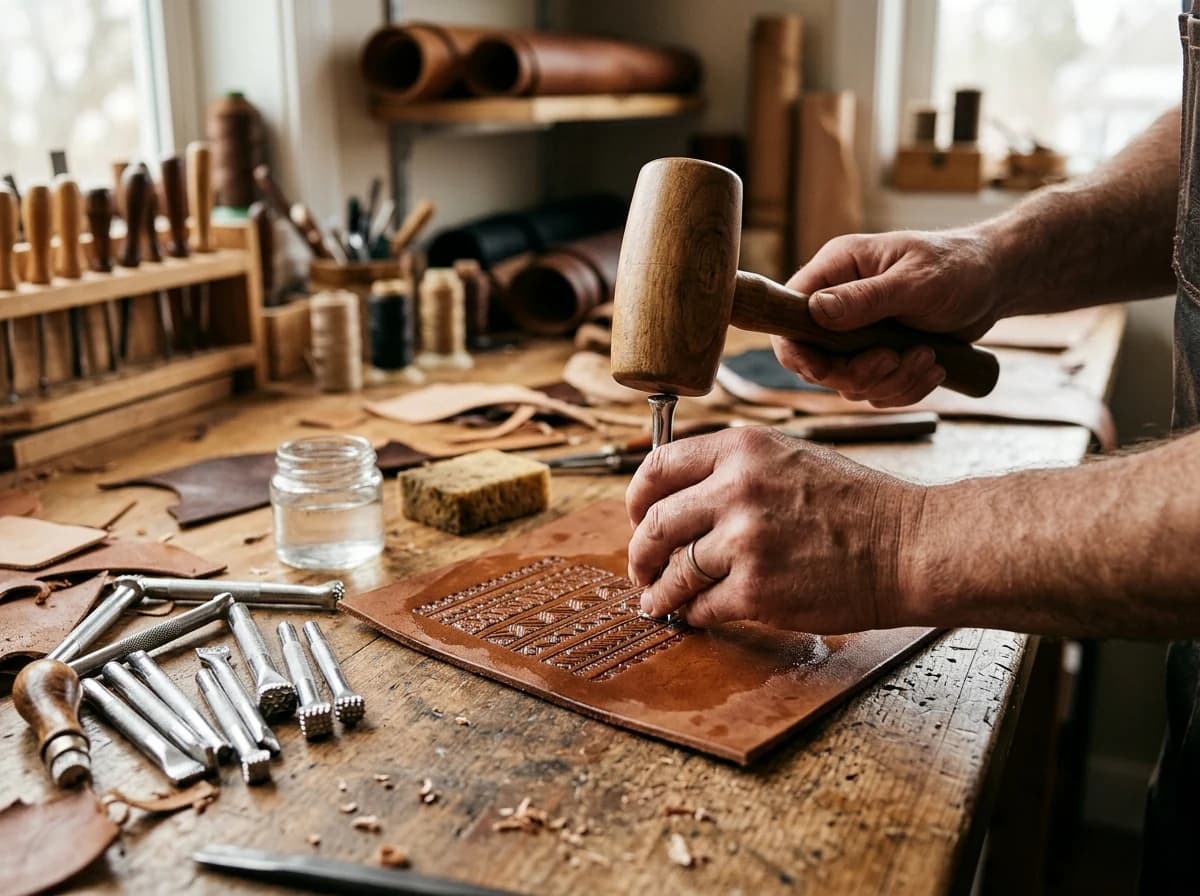
Feature high-resolution photos of your leather goods from multiple angles, highlighting details, stitching, and the texture of the leather. Include clear descriptions, dimensions, materials used, and pricing for each item.
AI website builder for leatherworking
Show your leather pieces, materials and making process with practical custom order guidance.
Your work deserves a good first impression
Explore templates for leatherworking websites. Preview a design, then make the content, photographs and colours your own.
A first draft, with room to make it yours
Start with an idea or a relevant template. Refine it around your leatherworking audience and the information they need.
Tell the AI who you serve, what you offer and the style you want. Include product gallery & shop and about our craft & materials in your brief, or choose a relevant template.
Name your audience and the next action you want visitors to take.Ask the AI Editor for any change, or click an element to show what you mean. Add your own photographs and review product gallery & shop, about our craft & materials, custom orders & commissions before sharing your website.
Confirm every claim and replace sample content with your actual details.Check the website on phones, tablets and desktop screens. Publish with hosting and SSL, and connect a domain you own when your plan includes custom domains.
Test your contact form and every external service link after publishing.The details that help visitors choose
A leatherworking website is where your bench work turns into orders, and Grigora builds one for makers, repair shops and pattern sellers from a plain description of the craft. Say what you make, belts, bags, holsters, saddlery or repairs, and the AI drafts the layout, copy and images, which you then change by describing edits in the AI Editor.
Feature high-resolution photos of your leather goods from multiple angles, highlighting details, stitching, and the texture of the leather. Include clear descriptions, dimensions, materials used, and pricing for each item.
Share your passion for leatherworking, detailing your techniques, the types of leather you use, and why you choose them. Emphasize sustainability, ethical sourcing, or the unique characteristics of your materials.
Clearly explain your process for custom leather projects. Detail how clients can submit ideas, discuss designs, and what the lead times and pricing considerations are. This taps into a lucrative market for bespoke items.
 Heritage Saddlery Shop
A clear first impression
Feature high-resolution photos of your leather goods from multiple angles, highlighting details, stitching, and the texture of the leather. Include clear descriptions, dimensions, materials used, and pricing for each item.
Your work, clearly presentedInteractive design inspiration. Illustrative photography and sample copy.
Plan the pages your visitors will use
A practical leatherworking website content guide. Choose the pages that fit what you do and keep the important answers close.
Feature high-resolution photos of your leather goods from multiple angles, highlighting details, stitching, and the texture of the leather. Include clear descriptions, dimensions, materials used, and pricing for each item.
Share your passion for leatherworking, detailing your techniques, the types of leather you use, and why you choose them. Emphasize sustainability, ethical sourcing, or the unique characteristics of your materials.
Clearly explain your process for custom leather projects. Detail how clients can submit ideas, discuss designs, and what the lead times and pricing considerations are. This taps into a lucrative market for bespoke items.
Introduce yourself as the artisan behind the brand. Share your journey into leatherworking, a glimpse into your workshop, and the tools you use. This personal connection builds trust and value for handmade goods.
Provide advice on how to care for leather products, including cleaning, conditioning, and storage tips. This adds value for customers and demonstrates your commitment to the longevity of your craft.
Feature glowing reviews from satisfied customers. Even better, include photos of customers using and enjoying your leather products. This builds social proof and shows the real-world appeal of your craftsmanship.
Review site analytics to understand which pages people visit. Keep product gallery & shop and contact information easy to reach, and update them when your work changes.
Explore the tools behind your websiteMake the next step obvious
Choose how visitors to your leatherworking website reach you. Make each action fit the services and processes you already use.
Help visitors ask about product gallery & shop. Use a contact form that collects the details your team needs, and explain what happens after an enquiry.
Your team reviews requests and confirms the next step.
Keep specialist workflows for your leatherworking website in the services you already use. Add clear links and explain their process before visitors leave your site.
Your chosen provider handles its own availability, confirmations and account access.
If you sell products or agreed services, add Grigora Commerce product pages, a cart and checkout with your connected Stripe, Razorpay, PayPal, or Paddle account. Explain prices, terms and fulfillment before accepting payment.
Your team manages orders and fulfillment; payment provider fees and terms apply.
SEO for leatherworking websites
Good leatherworking website SEO starts with useful pages. Make product gallery & shop, your contact details and your story easy to find.
Your website
https://leatherworking.example/Explore product gallery & shop and about our craft & materials, learn about our approach and find out how to contact us.
Fictional example. Search engines choose the final title and snippet.
Give pages for product gallery & shop and about our craft & materials clear titles. Write descriptions that match their actual content.
Explain product gallery & shop with original copy and relevant photographs. Keep contact details and any locations you serve accurate.
Publish with hosting, HTTPS and a sitemap. Use clear navigation so visitors and search engines can reach your pages. Custom domains are available on paid plans.
Room to start. Room to grow.
Build and review your first leatherworking website draft with no card needed. Choose a plan before the trial ends to keep the site online.
Compare plans for your domain and the content your leatherworking website needs. Paid plans keep your site online after the trial and let you connect a domain you own.
Check current plan limits and feature eligibility before choosing. Connected payment providers have their own terms and processing fees.
The last check before going online
Walk through your leatherworking website as a visitor would. Review these details before publishing, and again whenever your content changes.
0 of 5 items reviewed
Before you go online
Clear answers about creating a leatherworking website, its content and the tools you can use.
Grigora features a built-in newsletter system, enabling you to create, send, and track email campaigns. You can use newsletter subscription forms on your website to build your mailing list. Email templates ensure professional communications for new product launches, workshop announcements, or special offers, keeping your audience engaged and informed.
Yes. Grigora Commerce supports digital downloads, so pattern PDFs, tooling templates, or video tutorials can be sold as one-time purchases with the download link emailed to each buyer, right alongside your finished leather goods in the same store.
Set up product options in Grigora Commerce, for example leather color, hardware finish, and thread color, with matching variants and SKUs. The customer picks a combination on the product page and checks out through your connected Stripe, Razorpay, PayPal, or Paddle account.
Grigora Commerce includes manual fulfillment, so you mark an order fulfilled yourself once the piece is actually finished rather than the system assuming instant dispatch, and order tracking keeps the customer updated on where things stand.
Build a directory, a structured content collection with typed fields like image, rich text, and reference, to catalog commissions and finished work as a browsable gallery that sits apart from your product catalog and checkout flow.
Not as an import, because there is no importer for sites made with the AI builder. Give the AI builder the address of your current site and it drafts a new version from the public pages it can read, so you check every page against the original rather than starting from scratch, then add your products in Commerce.
Add each piece as a product with photos, a price and options for hide colour, thread and hardware. Set stock counts so a one off cannot be sold twice. Connect your Stripe, Razorpay, PayPal, or Paddle account, set your shipping rates, and orders land with the buyer's choices listed so you can cut and stitch to spec.
Shipping setup lets you define the rates and destinations you are willing to send to, which matters when a saddle and a card wallet cost very different amounts to post. Set flat rates or per region rates, mark orders fulfilled once you have posted them, and give buyers your real make time up front.
Use an intake form. Ask for photos of the damage, the item type, whether it is stitching, hardware, lining or dye work, and a rough age. That is usually enough to quote a band before the item arrives. Charge the repair as a fixed price product once you and the customer agree on the work.
Starter is $15 a month, or $144 a year, which works out to $12 a month, Pro is $25 a month, and there is a free trial instead of a permanently free plan. Card processing is billed by your own Stripe, Razorpay, PayPal, or Paddle account rather than added on top, and a mailbox on your domain is $5 a month.
Describe your leatherworking website. Get a first draft you can edit and make your own.
Start building free