When to Send a Job Acceptance Email
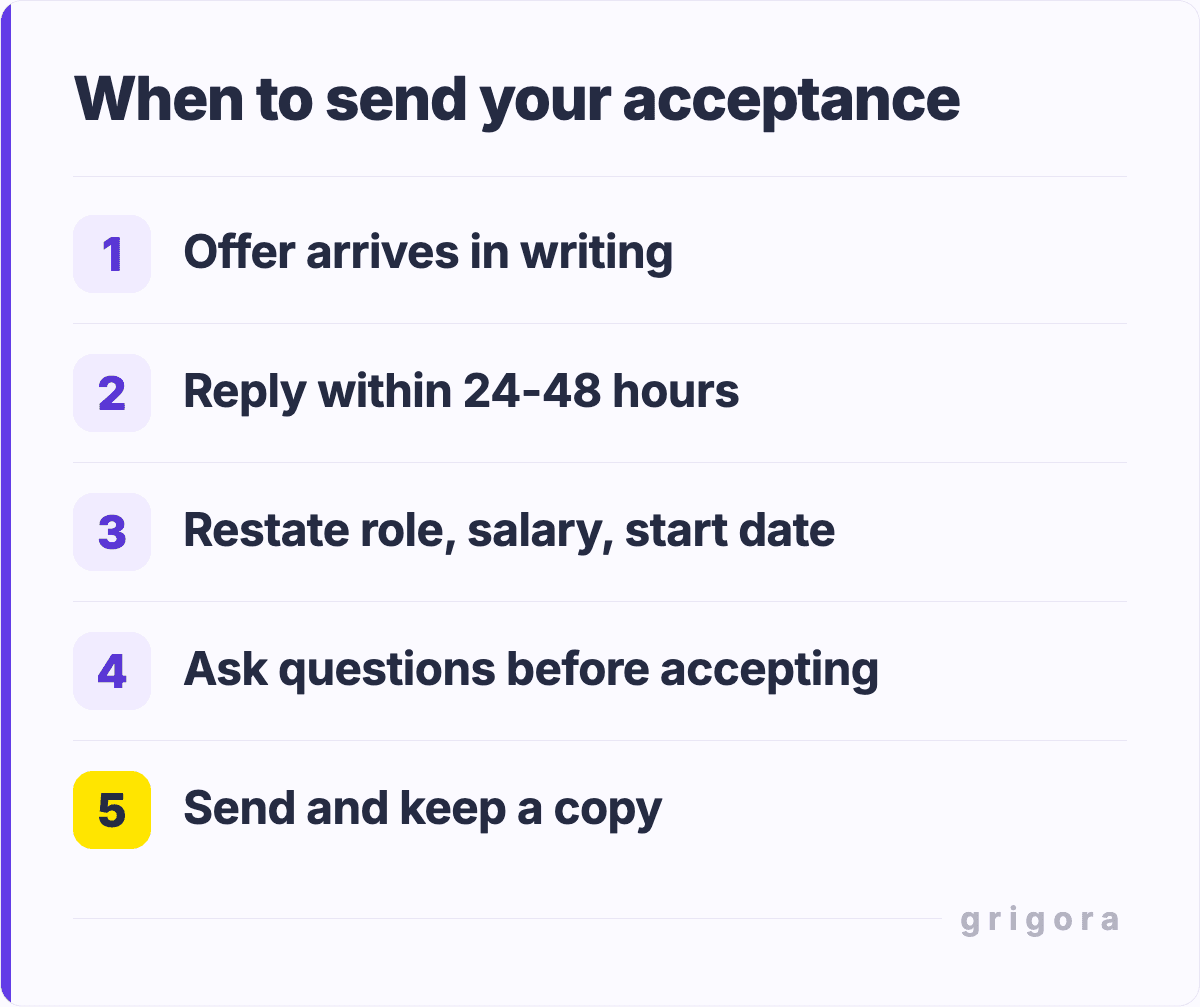
Timing your job acceptance email appropriately shows professionalism and respect for the hiring process. Once you have made the decision to accept the offer, send your acceptance email within 24 to 48 hours of receiving the written offer. If you need additional time to consider the offer or negotiate terms, communicate this to the employer promptly rather than leaving them waiting without a response.
Before sending your acceptance, make sure you have received a formal written offer that includes all the key terms such as job title, salary, start date, benefits, and any other conditions of employment. Accepting verbally over the phone is common, but always follow up with a written email to create a documented record of your acceptance and the agreed-upon terms.
Essential Elements of a Job Acceptance Email
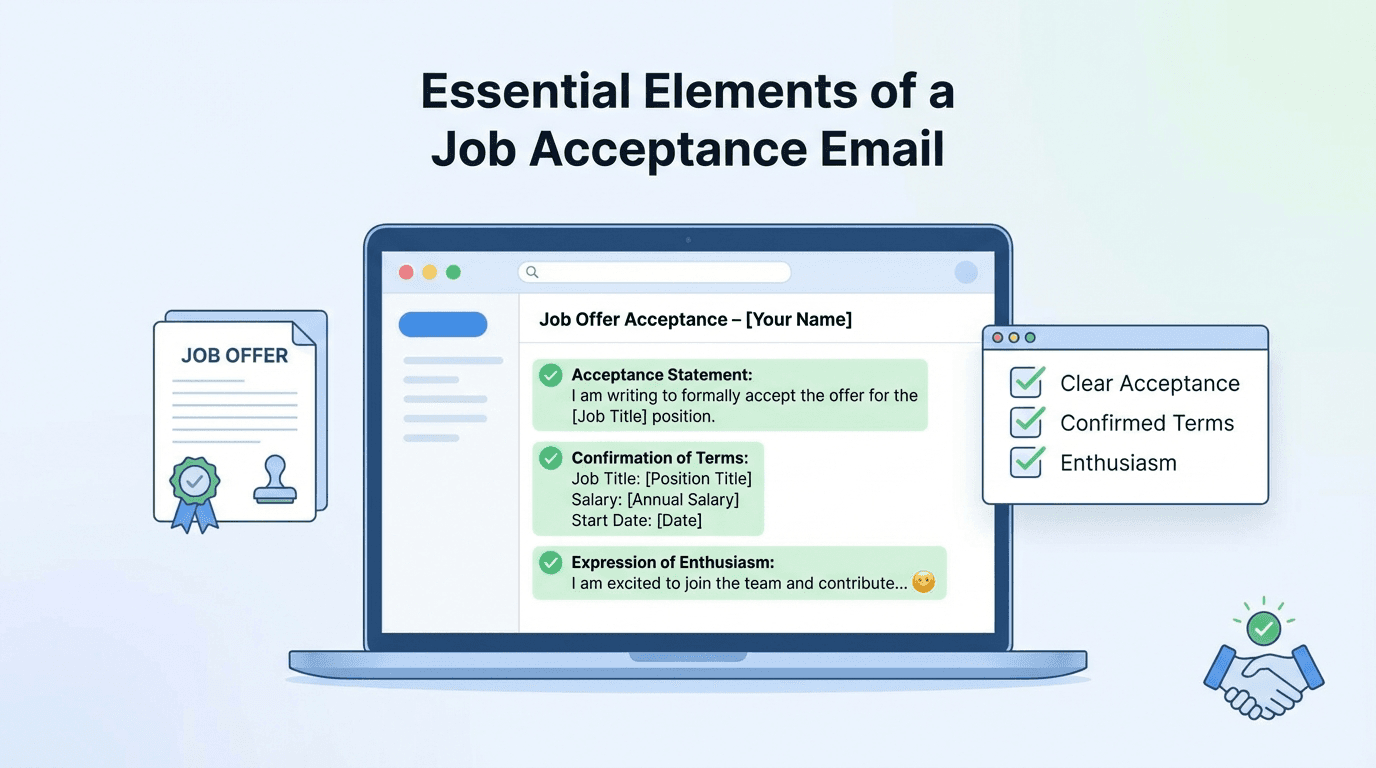
Every job acceptance email should include several key components to ensure clarity and professionalism. Missing any of these elements can create confusion or leave important details unconfirmed.
Clear Expression of Acceptance
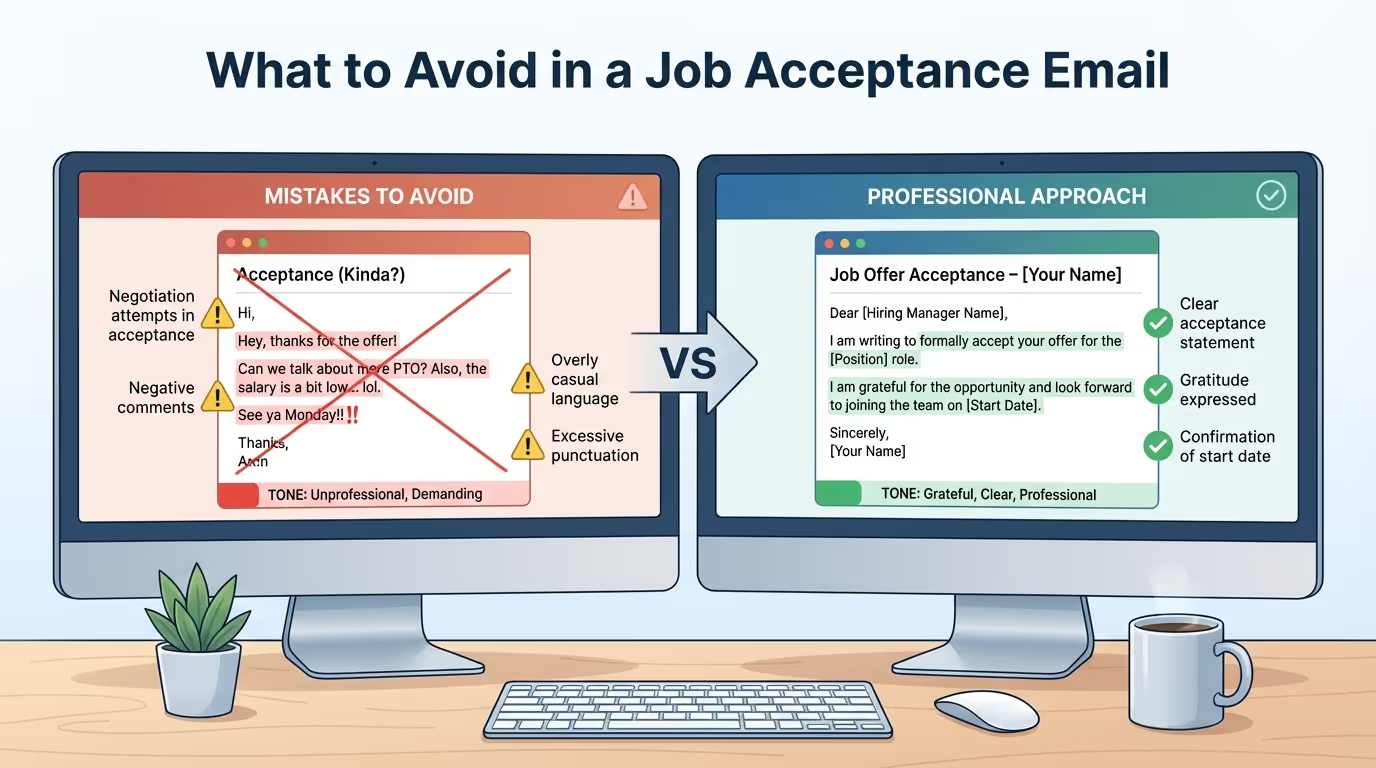
State explicitly that you are accepting the job offer. Do not leave any ambiguity about your decision. A direct statement like "I am pleased to formally accept the offer for the [Position Title] role at [Company Name]" removes any doubt about your intentions.
Confirmation of Key Terms
Restate the important details of the offer in your acceptance email. This includes the job title, agreed salary or compensation package, start date, reporting structure, and any special terms that were negotiated. Confirming these details in writing protects both you and the employer by ensuring everyone is aligned on the terms of employment.
Expression of Enthusiasm
Convey genuine excitement about joining the organization. This does not need to be over the top, but expressing that you are looking forward to the role and contributing to the team creates a positive start to the relationship. Reference specific aspects of the role or company that excite you to make your enthusiasm feel authentic.
Gratitude
Thank the hiring manager and anyone else who was involved in the interview process. Acknowledging the time and effort they invested in evaluating your candidacy demonstrates appreciation and good manners.
Job Acceptance Email Samples

Standard Job Acceptance Email
Subject: Acceptance of [Position Title] Offer - [Your Name]
Dear [Hiring Manager Name],
I am writing to formally accept the offer for the [Position Title] position at [Company Name]. Thank you for this wonderful opportunity, and I am thrilled to join your team.
As discussed, I understand the details of the offer to be as follows: a starting salary of [amount] per year, a start date of [date], and [mention any other agreed terms such as signing bonus, remote work arrangement, or relocation assistance].
I am genuinely excited about the opportunity to contribute to [Company Name] and to work with the [department/team] team. I look forward to bringing my experience in [relevant skill area] to help achieve [company goal or team objective].
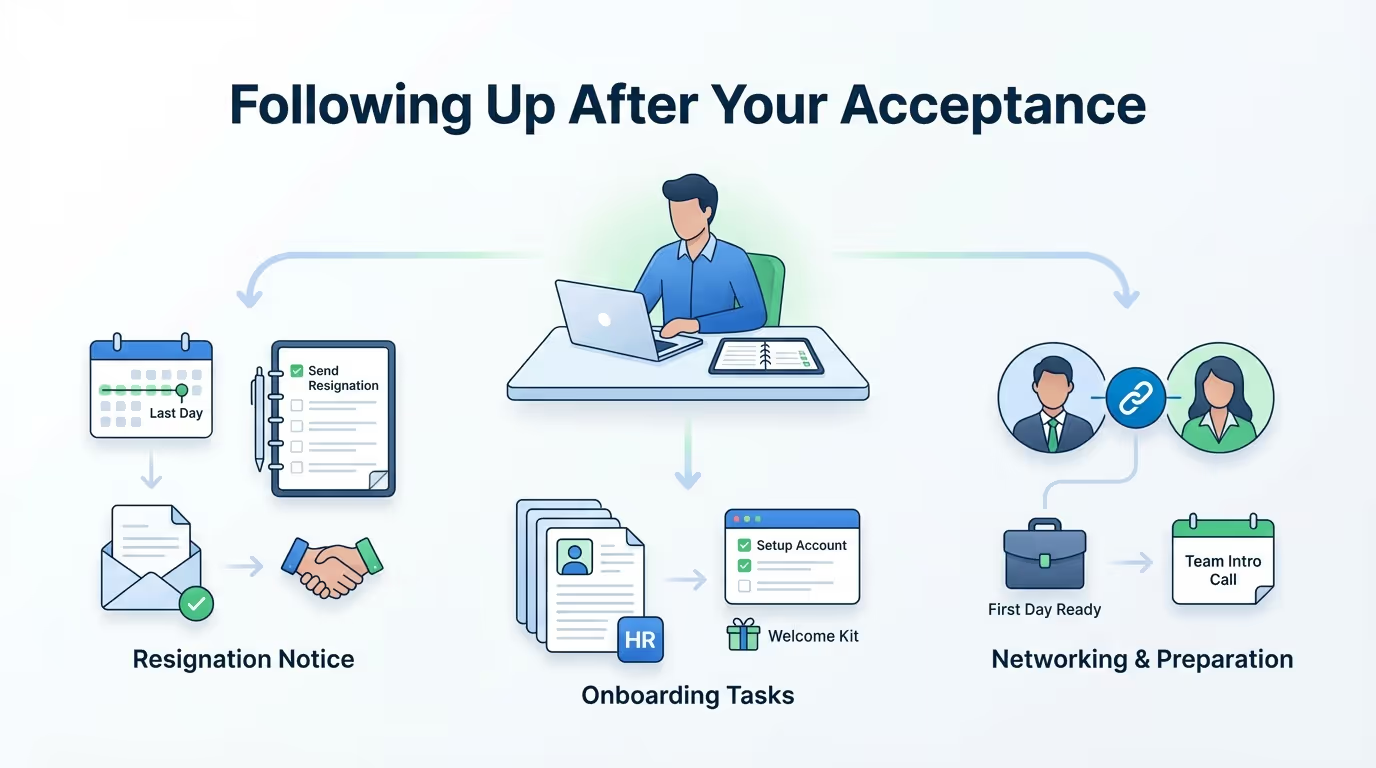
Please let me know if there are any documents or forms I need to complete before my start date. I am happy to take care of any pre-employment requirements at your convenience.
Thank you again for this opportunity. I look forward to getting started on [start date].
Sincerely,
[Your Full Name]
[Phone Number]
[Email Address]
Job Acceptance After Negotiation
Subject: Acceptance of Revised Offer - [Position Title] - [Your Name]
Dear [Hiring Manager Name],
Thank you for accommodating my request and revising the offer for the [Position Title] role. I am pleased to accept the updated terms and am excited to begin this next chapter of my career at [Company Name].
To confirm, I am accepting the position with a starting salary of [negotiated amount], a signing bonus of [amount if applicable], and a start date of [date]. I also appreciate the flexibility regarding [any other negotiated terms such as remote work days or professional development budget].
I want to express my gratitude for the thoughtful consideration throughout this process. The willingness to work together on the offer terms reinforces my enthusiasm about joining an organization that values its employees.
Please share any onboarding materials or next steps at your convenience. I am eager to prepare for a strong start.
Best regards,
[Your Full Name]
[Phone Number]
Brief and Concise Acceptance Email
Subject: Accepting the [Position Title] Offer
Dear [Hiring Manager Name],
I am happy to accept the [Position Title] position at [Company Name] with a start date of [date] and an annual salary of [amount]. Thank you for this opportunity.
I look forward to contributing to the team and am available to complete any pre-employment requirements. Please let me know the next steps.
Best regards,
[Your Full Name]
Executive-Level Acceptance Email
Subject: Formal Acceptance - [Position Title], [Company Name]
Dear [Name],
I am writing to formally confirm my acceptance of the [Position Title] role at [Company Name], effective [start date]. I have reviewed the offer letter dated [date] and am in agreement with the terms outlined, including the compensation package of [salary], [equity/bonus structure], and [other terms].
I have great confidence in [Company Name]'s direction and am committed to contributing to [specific strategic goal or initiative]. The conversations I had with [names of senior leaders met during process] reinforced my conviction that this is an exceptional opportunity to make a meaningful impact.
I will coordinate with [HR contact name] regarding the onboarding process and any required documentation. Please do not hesitate to reach out if there is anything you need from me in the interim.
I look forward to our collaboration.
Warm regards,
[Your Full Name]